Why Nissin Cup Noodles Moved Me on an Alaska Northern Lights Tour

Introduction
Have you ever come home from a trip and found that one particular scene keeps coming back to you at random moments?
Hi everyone, this is Suzuki from EcoDrive.
Today I want to talk about Nissin Foods, the company behind Cup Noodles and, back home in Japan, Chicken Ramen.
I went to Alaska recently, and while I was still basking in the afterglow of that trip, one moment kept replaying in my head. A moment that made me think, “Wow, Nissin is really something.”
I couldn’t shake it, so let me tell you that story today.
[Watch the video version here]
Japanese audio with English subtitles.
Most of us don’t spend much time thinking about instant noodles.
They’re just there on the shelf at the grocery store, ready for a busy night or a late craving.
But what happened in Alaska made me look at that everyday product in a completely different way.
A Quick Word About Alaska
First, a little about where this took place.
Alaska is a world apart from the rest of the country, and the scale of it is hard to take in until you’re standing in it.
The Arctic Ocean to the north, the Bering Sea to the west, the Pacific and the Gulf of Alaska to the south, and the largest land area of any state in between.
Mountains, glaciers, forests, snowfields, lakes, coastline: the scenery and the weather change dramatically depending on where you are.
From Southern California, Alaska already feels far away, and once you’re there, the scale of the landscape and the harshness of the conditions really hit you.
It’s a beautiful place to visit, but the conditions can be demanding.
Outside the cities there are few lights and few buildings, so the sky feels enormous.
At the same time, winter nights get seriously cold, and wind and snow have a much bigger say in your plans.
Being there felt less like sightseeing and more like stepping into nature itself.
What the Northern Lights Actually Are
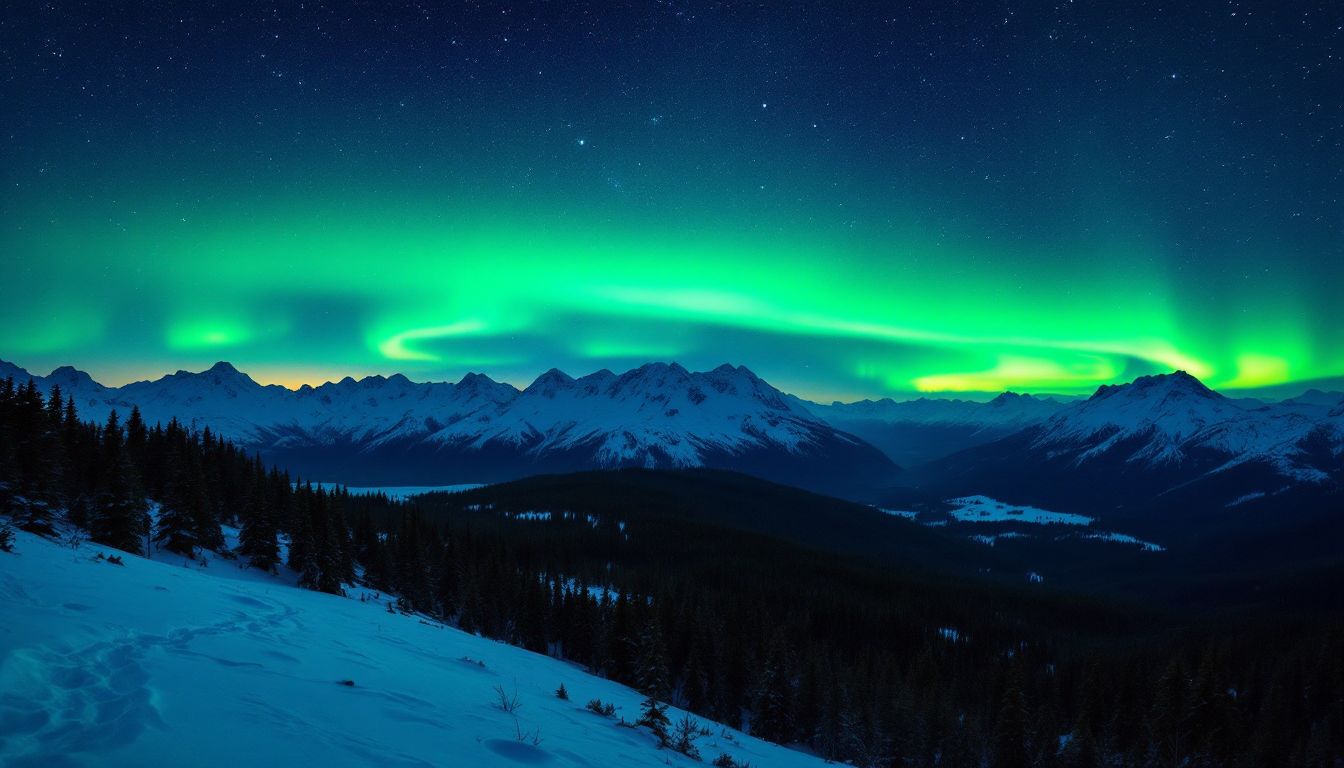
The whole point of this trip was to join a tour to see the northern lights.
Quick refresher: the aurora is a natural phenomenon where curtains of light appear in the night sky.
You’ll see them called the Northern Lights, or Aurora Borealis.
Most people picture green light rippling overhead, but depending on conditions they can also show up red, purple, or bluish.
The aurora is said to come from particles streaming off the sun interacting with the Earth’s magnetic field and atmosphere.
Electrons from space flow along magnetic field lines and collide with atoms and molecules high in the atmosphere, and those collisions produce light.
So it isn’t a city view or a light show. It’s light created where the Earth and space meet.
That’s probably why so many people want to see it at least once.
Why Alaska is known for aurora viewing
Geography has a lot to do with it.
The aurora isn’t equally visible everywhere, and some regions have far better odds than others.
High-latitude areas close to the Arctic Circle are especially good.
Within Alaska, the area around Fairbanks is well known for aurora viewing.
It sits close to the band around the magnetic pole known as the auroral oval, and when conditions line up, the lights can appear directly overhead.
That’s why people travel from all over the world to Alaska to see them.
A Four-Hour Wait on a Mountaintop at 5°F
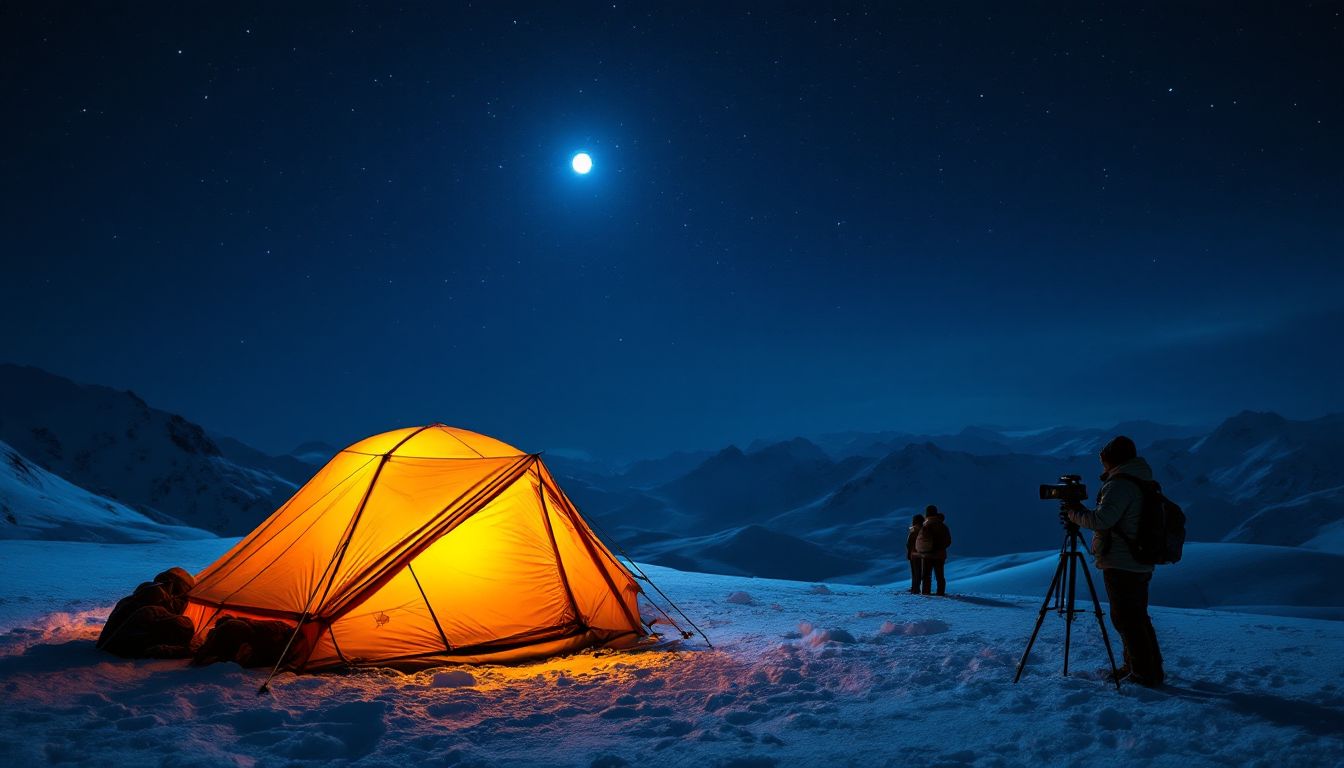
The tour itself turned out to be pretty demanding.
“Aurora tour” sounds dreamy and romantic. You picture curtains of light across the whole sky, and it really is a special experience.
But it also takes some stamina.
The thing is, you don’t just show up and see the aurora.
Clear skies, real darkness, the right solar and geomagnetic conditions: several things have to line up at once.
So an aurora tour is less about seeing and more about waiting for something to appear.
You can wait for hours in the cold and still come away with nothing.
That’s the part you have to make peace with before you go.
Our spot was the top of a snow-covered mountain at around 5°F, or about minus 15°C.
The wait ran from roughly 11 p.m. to around 3 a.m., about four hours.
Four hours of standing by for the lights to show up.
What 5°F actually feels like
That kind of cold isn’t something most of us deal with day to day.
Even if you’re used to cold winters, spending hours essentially outdoors at 5°F is hard on the body.
Your fingertips get cold through your gloves, and even bundled up, the chill creeps up from your feet.
And waiting for the aurora isn’t active. You’re mostly standing still.
Cold you could shrug off while moving works its way into you when you’re standing and sitting around for hours.
There was a large tent at the summit that could hold about 20 people, with a heater inside.
It did warm you up, but honestly, it was still cold.
When it’s that cold outside, a tent only does so much.
People come and go, cold air comes in with them, and every time you step out to check the sky, you lose whatever warmth you’d built up.
Once you’re chilled to the core, sitting next to the heater doesn’t fix it right away.
I talk a bit about how demanding these tours can be in a short video too, “The Japanese food I ate on a snowy mountain in Alaska.”
It gives you a better feel for what it was actually like out there.
At 1 a.m., the Midnight Snack Was Nissin Cup Noodles
So there we were, riding out the cold, when at around 1 a.m. our guide came over, said “midnight snack, please help yourself,” and handed something out.
By then it was well past my usual bedtime.
After hours of waiting in the cold, you’re worn down and genuinely hungry.
Hearing the words “midnight snack” at that moment is a small rescue all by itself.
Anything warm would have been welcome.
So, what was it?
Not a burger.
Not fries.
It was Nissin Cup Noodles.
When you hear that a tour is handing out a snack, you probably picture sandwiches, burgers, or chips, the kind of thing that’s easy to pass around.
That’s exactly why the cup noodles caught me off guard.
It’s a familiar product for Japanese people, but I didn’t expect it to turn up on a mountain in Alaska, handed out to a group of travelers from all over the world.
What one hot cup is worth when you’re cold and hungry
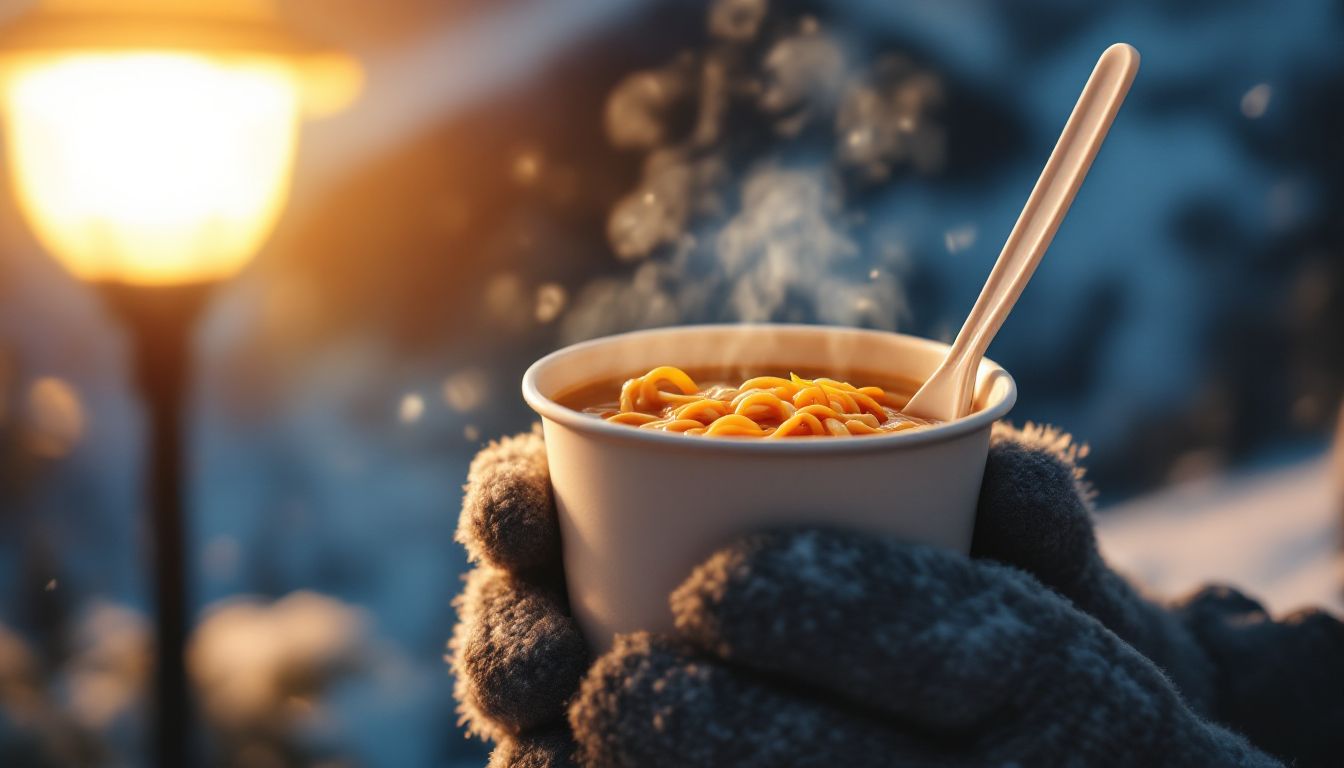
I don’t eat instant noodles much these days, but I was freezing and starving, so I gave it a shot.
And honestly, it was incredible.
How good food tastes isn’t only about the food.
Where you eat it, and how cold and tired and hungry you are, change the experience completely.
A hot cup of noodles at 5°F, in the middle of the night, on an empty stomach.
That’s nothing like the same cup at home or at the office.
The steam, the hot broth, the warmth spreading slowly through you.
In that cold, that alone felt like a gift.
Thinking about it afterward, cup noodles are remarkably well suited to an environment like that.
All you need is hot water. No bowl, no dishes, and you have a hot meal in a few minutes.
In a cold place with limited facilities, that kind of convenience is worth a lot.
Convenience you take for granted at home looks completely different once you’re somewhere harsh.
New Arrivals
Discover our newest arrivals—available now!
















































































Everyone Eating in Silence, from All Over the World
What really got me, though, was the scene around that snack.
Everyone else on the tour was eating too, quietly, without a word.
When you’re eating something hot in the cold, conversation tends to drop away.
It wasn’t a lively group moment. Each person was just focused on the cup in front of them.
That silence is what stuck with me.
The tour had people from all over: Americans, and travelers from India, the Arab world, Southeast Asia, and the Nordic countries.
Different countries, different cultures, different eating habits.
Different everyday foods, different taste preferences, different levels of familiarity with noodles.
And yet there we all were, in the same tent, eating the same cup noodles.
It was more than a group of people having a snack.
It looked like a product born in Japan being accepted, effortlessly, across every one of those backgrounds.
We Were the Only Ones Slurping
There was one funny detail in all of this.
The only people slurping the noodles were us, the Japanese travelers in the group.
Every time I took a mouthful, I could feel eyes on me.
I thought about why, and it’s simple enough: in Japan, we slurp our ramen. That loud pull of noodles.
People from a lot of other countries don’t really eat that way.
So it must have looked pretty unusual.
In Japan, slurping ramen, soba, or udon isn’t remarkable at all.
It cools the hot noodles as you eat, and it’s part of how noodle dishes are enjoyed.
That said, in some countries and cultures, eating with sound is something people would rather avoid.
So even with the same cup of noodles in hand, the way people eat still reflects where they grew up.
Of course, when you’re eating abroad, it’s worth being considerate of the people around you.
At the same time, the way you grew up eating tends to come out naturally.
I felt the glances, but I kept right on slurping.
That’s how you eat ramen, as far as I’m concerned.
Looking back, slurping Nissin Cup Noodles on a snowy mountain in Alaska makes for a pretty funny picture.
A Japanese Product, Welcomed Near the Arctic Circle
What moved me most was simply that this scene existed, in that place.
In Japan, Japanese products are part of the background. You walk into a supermarket or a convenience store, the shelves are full of them, and nobody thinks twice about it.
But watching people from all over the world eat Japanese cup noodles on a snowy mountain in Alaska makes that ordinary thing look entirely different.
The setting is a big part of it.
A place far from Japan, up beyond the northwestern edge of the continent.
Hard country, where winter nights turn brutally cold.
And there, people who had come from all over to see the aurora were sitting in the same tent eating Nissin Cup Noodles.
On a snowy mountain near the Arctic Circle, travelers from many different countries were all happily eating Japanese cup noodles.
That felt nothing like seeing the same product on a shelf in Japan.
Seeing a product that feels completely ordinary back home in a setting this remote shows you just how far the brand has reached.
Something that started in Japan, reaching people from all over in a place this remote.
That fact genuinely moved me.
Real Respect for What Nissin Has Built
Looking at it that way, the scene said something not just about how the product tastes, but about the effort and the distribution work it took to get it there.
Getting a product to spread around the world isn’t simple.
Different countries mean different taste preferences, different food cultures, different retail environments, different occasions for eating.
And yet Cup Noodles has spread far enough that it turns up as the natural choice for a midnight snack on an aurora tour in Alaska.
That doesn’t happen just because someone made a good product.
It takes years of building awareness, getting onto local shelves, getting into people’s hands, and earning a place there. All of that adds up to a moment like the one I saw.
I have real respect for how far Nissin Foods has spread cup noodle culture around the world.
I’d never paid much attention to cup noodles before, and this one experience changed how I see them.
Final Thoughts
The cup noodles I ate in Alaska weren’t just a good hot snack in the cold.
Near the Arctic Circle, people from all sorts of countries were eating the same Japanese product.
Seeing that gave me a sense of the scale of what Nissin Foods has built over many years.
Even a product you barely think about can look completely different when the place and the circumstances change.
That one cup of noodles on a snowy mountain in Alaska was exactly that kind of experience.
And if you ever make the trip north to chase the lights, pack more layers than you think you need.
So how did Nissin spread Cup Noodles this far around the world?
Next time, I want to take a closer look at how Cup Noodles expanded globally, and how the products are adapted to the food cultures of different countries.
See you next time.
You May Also Like