What Is Kura Sushi? Why Conveyor Belt Sushi Works in America
Introduction
Hi everyone, I’m Suzuki from Eco Drive.
Today’s topic is why Kura Sushi has made conveyor belt sushi feel more approachable in America.
What Is Kura Sushi?
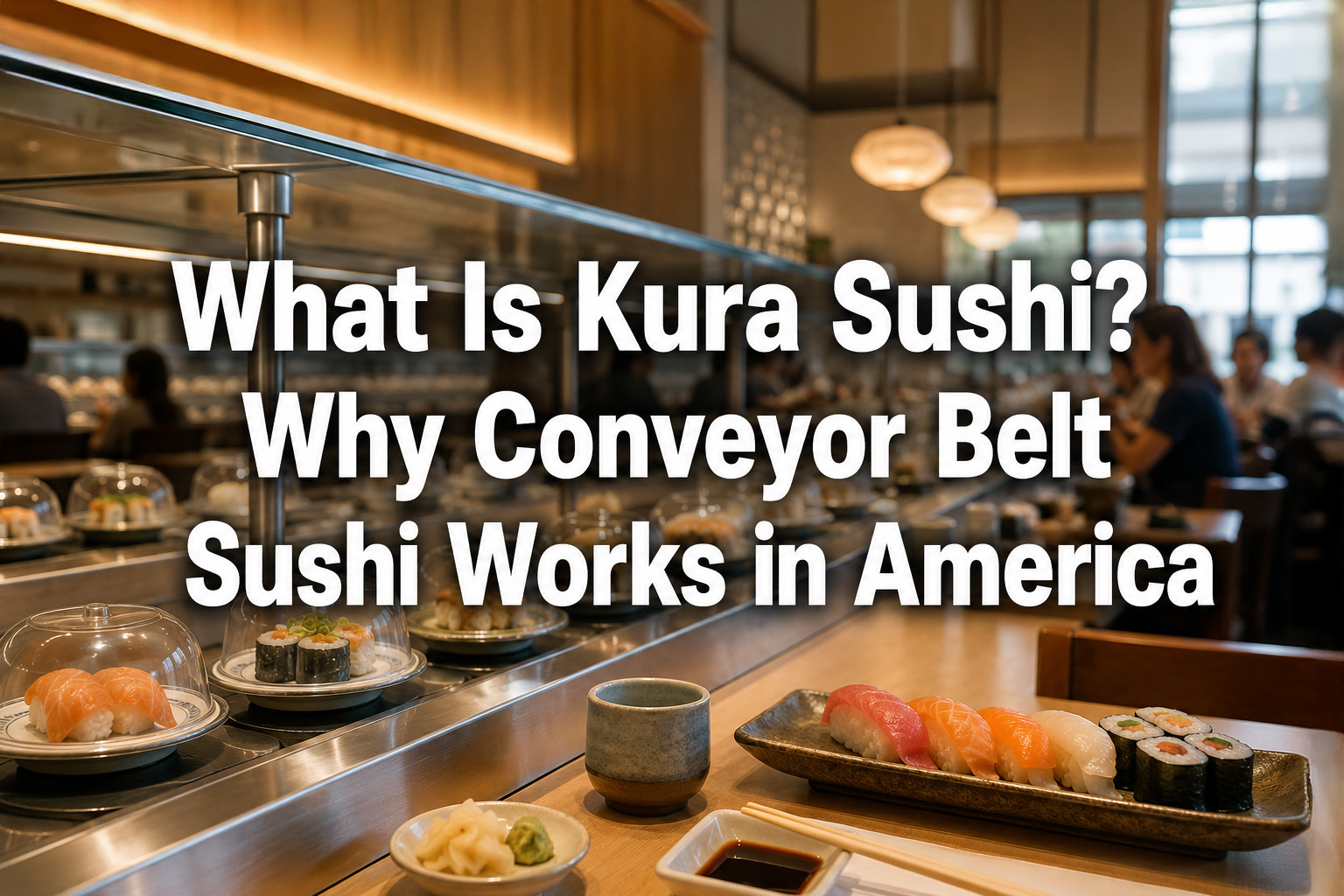
For readers who may not be familiar with it, Kura Sushi is a Japanese revolving sushi restaurant chain. In Japan, it is known as an affordable, casual, family-friendly place to enjoy sushi, side dishes, noodles, and desserts in small portions.
At Kura Sushi, plates of sushi move around the restaurant on a conveyor belt, and guests can also order from a touchscreen at the table. Many locations also feature Bikkura Pon, a prize system where guests can receive a small randomized prize after inserting 15 sushi plates. That mix of sushi, technology, and entertainment is a big part of what makes the restaurant feel different from a traditional sushi bar.
I’ve spent more than two decades living in Southern California, and as someone originally from Japan, I’ve watched Kura Sushi with a special kind of interest. It has been meaningful to see Japanese food culture become more familiar, accessible, and enjoyable for everyday diners in the U.S.
At the same time, this is not meant to be a corporate analysis. I want to look at Kura Sushi from a local diner’s perspective and talk about why it has become such a memorable part of the sushi experience for many families, couples, and first-time sushi diners here.
[Watch the video version here]
Kura Sushi’s Path to U.S. Expansion
Kura Sushi entered the U.S. market in 2009 with its first location in Irvine, California, and went public on the Nasdaq in 2019.
According to Kura Sushi’s official site, the chain now has more than 90 U.S. locations, with additional openings planned.
For a Japanese restaurant concept to expand this widely in the U.S. is genuinely impressive.
The difficulty of expanding service businesses overseas
I originally came from the service industry myself and moved to the U.S. as an expat, so I know firsthand how hard this is.
Cultural differences, labor environment differences, regulatory differences, and most of all, differences in consumer taste.
Clearing all of those hurdles to succeed is no small feat.
Yoshinoya has also been in the U.S. for decades, with a presence that is still heavily centered in California.
But Kura Sushi’s growth has been especially notable because it has expanded well beyond California.
Rather than treating this as a corporate analysis, I want to look at it from a diner’s perspective and talk about why Kura Sushi has become so memorable for many U.S. customers.
How Sushi Was Positioned in America
Bottom line: Kura Sushi won over mainstream families and couples in a major way.
In Japan, conveyor belt sushi is just part of everyday life, right?
You’ll find it next to train stations, in shopping malls, basically everywhere.
But in America, it’s nowhere near that common.
In fact, traditional nigiri sushi itself was something of a novelty for everyday diners here.
Sushi as a luxury item
For many everyday diners at the time, sushi could feel like a high-end, intimidating food in the U.S.
Think of it the way Japanese diners think of caviar or foie gras.
Regular folks, myself included, don’t routinely eat caviar or foie gras. That’s pretty much how sushi was perceived here.
Something for a special day, with someone special, at a special place.
That was sushi’s place in America.
The American Sushi Scene Before Kura Sushi
At least in the parts of Southern California I knew back then, sushi often meant counter-style restaurants.
Dim lighting, hushed atmosphere, and that tense back-and-forth with the chef across the counter.
It was definitely not the kind of place where you’d bring a kid.
Opaque pricing
Prices weren’t transparent either — it was common to see menus without prices listed.
You’d often see “MP” written instead.
That stands for Market Price, basically meaning the price floated with the day’s wholesale cost.
It’s a frightening system for the average diner — your bill depended on what the fish market did that morning.
They felt more like special-occasion restaurants than casual family spots.
If you wanted sushi in America, your choices were basically these upscale, formal sushi bars or the rolls served at Japanese izakayas.
The everyday diner’s sushi = California roll
Izakayas were family-friendly enough to bring the kids, but the sushi on the menu was almost always the California roll.
A California roll has avocado on the inside, plus imitation crab and cucumber, all wrapped up with rice.
The seaweed is rolled on the inside, which is another giveaway.
For many casual diners back then, that was their main reference point for sushi.
The Stress of Eating at High-End Sushi Bars
Back in my early twenties I was on a tight budget, so California rolls were my go-to.
More traditional sushi bars were just too expensive for me at the time.
Some places didn’t even have a menu
Occasionally I’d splurge on an authentic sushi bar, and depending on the spot, the menu had no photos.
Worst case, there was no menu at all.
So what do you do? You ask the server.
You’d say “What do you recommend tonight?” and try desperately to follow their explanation.
And honestly, even as a native Japanese speaker, I often had no idea what the English names for half the fish meant.
It took forever for the food to arrive, you didn’t know the price, there were no photos so you had no idea what was coming out — and you’d just sit there nervously placing your order.
The fear of not knowing your total until the check arrived was real.
[Watch part two of the video here]
2009: Kura Sushi’s Game-Changing Debut
And so in 2009, Kura Sushi opened its first U.S. location in California.
If I remember right, plates were around $1.75 back then.
Even compared with casual sushi prices in Japan at the time, that felt very affordable.
The revolutionary touchscreen ordering system
What was truly mind-blowing was the screen at every seat.
It might feel ordinary now, but at the time it was wildly novel.
The screen displayed every menu item with a photo.
Prices were clearly listed.
You’d tap, place your order, and that was it.
Tap-tap-tap, and your sushi arrived in minutes.
We’re talking one or two minutes — it would just glide down the lane to your table.
This level of transparency and speed was unheard of in American sushi up to that point.
Bringing in gamification
And the kicker: eat 15 plates and you win a prize.
You drop your empty plates into a slot, a roulette spins on the screen, and if you hit a winner, a capsule toy pops out of a gacha machine.
When industry folks and customers saw this, the reaction was clear: Kura Sushi had created something that felt new, casual, and fun.
What Hooked the Kids
First and foremost, kids were completely smitten.
The prize incentive was a huge draw, but so was the experience of being able to order things themselves.
At most U.S. restaurants, you don’t usually see kids ordering directly from the server.
Parents typically handle the ordering.
A system that taps into kids’ independence
But at Kura Sushi, kids can pick whatever they want on the touchscreen and order it themselves.
Prices are right there, so parents can comfortably hand the wheel over to their kids.
That turned kids into devoted fans.
It works as a full-on entertainment experience.
For many diners, that game-like element makes the meal feel more engaging.
A natural gateway to more traditional nigiri-style sushi
What’s also important is that families weren’t just eating California rolls anymore — they started trying more traditional nigiri-style sushi.
Tuna, salmon, shrimp, squid, octopus.
Fish that you used to only find at upscale sushi bars suddenly became casual menu items anyone could try in small portions.
New Arrivals
Discover our newest arrivals—available now!




















































A Perfect Match for America’s Social Dining Culture
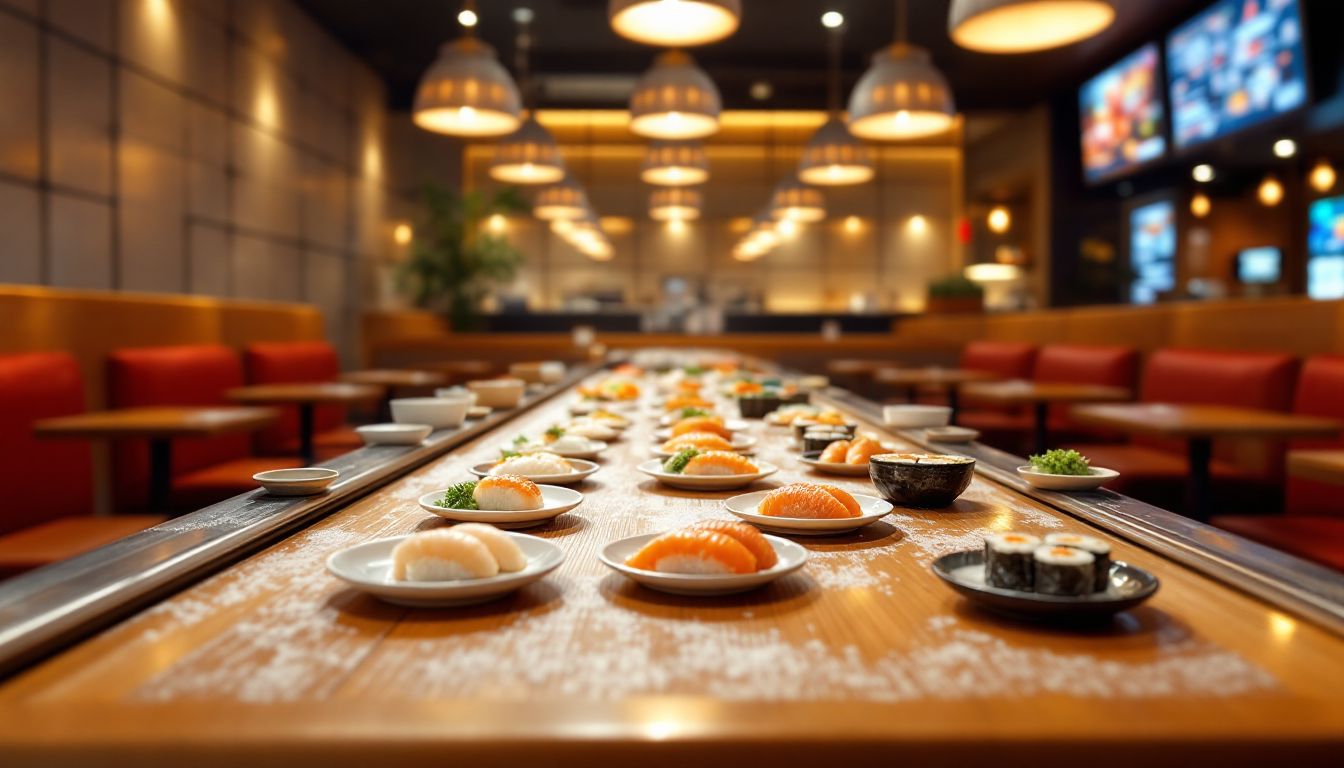
Kura Sushi’s setup also fits well with the casual, social side of dining out in the U.S.
You can see what people next to you are ordering as the plates roll by on the conveyor belt.
If something interesting passes in front of you, you can order it right there.
It sparks conversation
In casual settings, that kind of shared, interactive experience can naturally invite conversation — someone glancing over and asking, “Is that any good?” is an easy icebreaker at dinner.
That interactive dining experience is one reason the restaurant feels so approachable.
It’s the exact opposite of the quiet, stiff vibe of a high-end sushi bar — a casual, lively atmosphere instead.
These days, when it gets busy, a one-hour wait is just part of the deal.
And people happily wait.
A New Birthday Favorite for Some Local Kids
My child loves Kura Sushi too, and when their birthday comes around, they always say, “I want sushi.”
Specifically, “I want to go to Kura Sushi.”
Even when I suggest “There’s a more authentic, tastier sushi bar nearby,” they won’t budge — it has to be Kura Sushi.
A special place from a kid’s point of view
This isn’t just about taste.
For kids, Kura Sushi isn’t just a restaurant — it’s a place where they get a real experience.
The freedom to pick what they want, the thrill of the 15-plate challenge, the payoff of winning a prize. All of that combines into a memory they don’t forget.
Today’s Prices and Why the Popularity Hasn’t Cooled
Last week when I went, plates were $3.75 each — more than double the original $1.75 from the 2009 launch.
From a Japanese perspective, that can feel expensive for a conveyor belt sushi setting. But for U.S. diners, the comparison is different. They are comparing Kura Sushi to other casual sushi spots, family-friendly restaurants, and entertainment-driven dining experiences.
Extras you wouldn’t see in Japan
One thing that can surprise Japanese visitors is that the free green tea you might expect at a sushi restaurant in Japan costs money here — also $3.75 a cup.
If a family of four each orders tea, that adds another $15 before tax and tip.
From a Japanese perspective, that can feel surprisingly expensive, but paying for drinks at a restaurant is simply part of the dining culture in the U.S.
Why the popularity holds anyway
And yet, the one-hour wait is still business as usual.
The staying power of this popularity is striking.
Diners keep coming back even as prices climb, which says something important: people see real value here. Not just affordable sushi, but a full experience — the moving plates, the touchscreen ordering, the Bikkura Pon prize system, the chance to try small portions, and the fun of spotting something new sliding down the lane.
What Kura Sushi Changed About the Sushi Experience in the U.S.
At its core, what Kura Sushi changed was this: it made broader sushi culture feel more approachable for mainstream diners who may have first known sushi through California rolls.
Why the format worked
The appeal came from a simple combination: clear pricing, easy ordering, a casual atmosphere, and a little bit of entertainment at the table. For many diners, that made sushi feel less formal and much easier to try.
Why Kura Sushi Found a Different Lane

The high-end sushi market in the U.S. is already highly competitive.
Today, it includes talented chefs and restaurant groups from many different backgrounds. Competition is fierce, and standing out in that space is not easy.
A more approachable space
Meanwhile, the mainstream sushi market had room for a more casual, family-friendly experience.
Some people may have assumed that casual diners would be hesitant to try more traditional sushi items, or that conveyor belt sushi might feel too unfamiliar for the U.S. market.
Kura Sushi challenged that assumption by creating a format that felt casual, interactive, and easy to understand.
What Kura Sushi Reveals About How U.S. Dining Has Changed
Kura Sushi’s growth is not just a single-company story. It also shows how casual dining in the U.S. has changed over the last several years.
The full experience matters as much as the food
Diners still care about quality, of course. But the overall experience around a meal matters too.
Clear pricing. Easy ordering. A casual atmosphere. A sense of discovery. Something fun for kids. That combination is a big part of why Kura Sushi works for families, couples, and first-time sushi diners.
Technology that makes dinner easier
Touchscreen ordering may have caught attention at first as something new, but it has lasted because it makes the meal smoother. Many diners are comfortable with technology at the table when it makes the experience faster, easier, or more interactive.
The conveyor belt itself follows the same logic. It is not just a delivery system. It gives people choices, movement, and something to talk about during the meal.
Sushi became friendlier, not less interesting
Maybe the biggest cultural shift is that sushi feels more approachable now. People who first knew sushi through California rolls can try tuna, salmon, shrimp, eel, and other items in small portions, without the pressure of a formal sushi counter.
A Japanese Concept Reshaped for U.S. Dining
What makes Kura Sushi interesting is not that it simply copied the Japanese conveyor belt sushi model and dropped it into the U.S. unchanged. It kept the core idea, then adjusted the experience around what makes diners here comfortable.
Familiar enough, fresh enough
The result feels familiar to people who grew up with conveyor belt sushi in Japan, but fresh and exciting for many diners in the U.S. It is casual enough for families, fun enough for kids, and accessible enough for people who did not grow up eating sushi.
The generational shift
The most lasting impact may be that some kids growing up here now treat sushi as a normal everyday food.
When those kids become adults, sushi may not feel like a special-occasion meal. It may sit alongside pizza, tacos, and burgers as a regular option.
Final Thoughts
Kura Sushi helped reshape how many diners in the U.S. think about sushi. It made the format less formal, less intimidating, and more family-friendly.
For longtime sushi fans, it is an easygoing way to enjoy a casual meal. For first-time diners, it is a welcoming entry point. And for families, dinner can feel closer to an activity than just a meal — a stretch of time where everyone at the table has something to do.
If you have a Kura Sushi location near you — or you come across one while visiting Southern California — it is worth trying at least once. The food is the draw, but the experience is what keeps people coming back.
You May Also Like