Alcatraz Island: Who Escaped, Why It Closed & How to Visit
San Francisco Sightseeing: Alcatraz Island, the Prison Once Called Inescapable
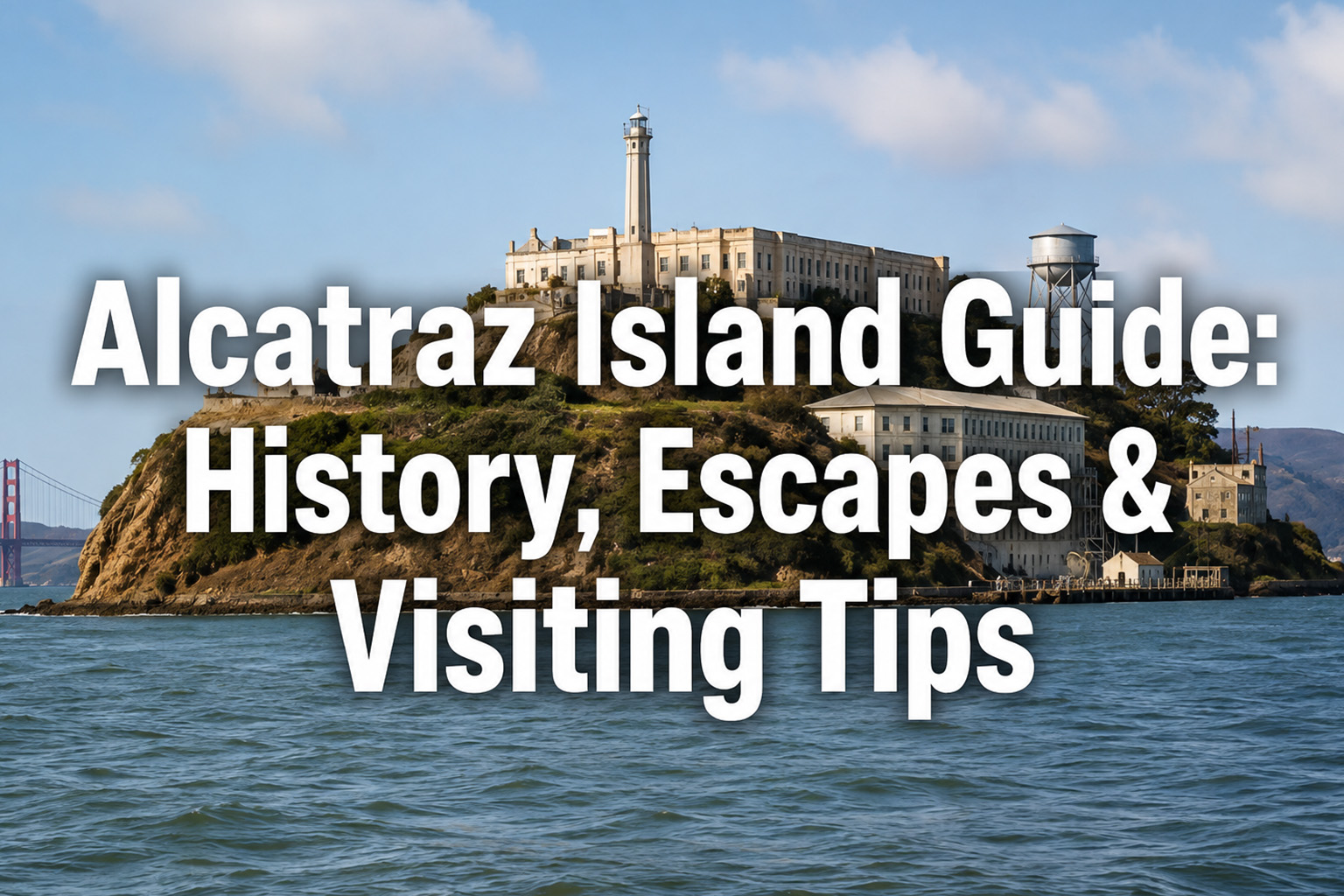
Alcatraz Island is a small island sitting in the blue water of San Francisco Bay.
For most people, the name brings one image to mind: the prison nobody could escape from.
But the story of this island goes far beyond its years as a penitentiary, and that is what makes it so interesting.
It has been a military fortress, a federal prison, and the stage for a Native American protest movement demanding freedom.
This guide walks through the layered history of that island.
From the truth behind the famous escape to how to make the most of a visit today, here is everything you need to know about Alcatraz.
Did anyone ever escape from Alcatraz? Officially, no one. Over 29 years, 36 inmates made 14 separate escape attempts. Five of those men vanished — among them Frank Morris and the Anglin brothers, John and Clarence, who slipped out on the night of June 11, 1962, and were never found. The FBI closed its own investigation in 1979 and handed the case to the U.S. Marshals Service, where it remains open today.
Why did Alcatraz close? Money. As an island, it cost roughly three times as much to run as other federal prisons, and about a million gallons of fresh water had to be barged over from the mainland every week. The prison shut its doors on March 21, 1963.
1. What Is Alcatraz Island?
Alcatraz Island lies just 1.25 miles (about 2.01 kilometers) offshore from the San Francisco coastline in California.
It is tiny, covering only 22 acres (0.089 square kilometers, or about 8.9 hectares).
The name “Alcatraz” derives from the Spanish “Alcatraces,” usually taken to mean “pelican” or “strange bird”.
In 1775, the expedition of Spanish explorer Juan Manuel de Ayala mapped San Francisco Bay and gave the name to one of the islands there, and it later attached to the island we know today as Alcatraz.
The nickname it later became known by, “The Rock,” came from something else entirely: the island’s solid bedrock, and the image of the impregnable fortress and prison built on top of it.
Today, Alcatraz Island is part of the Golden Gate National Recreation Area, managed by the National Park Service, and it draws roughly 1.2 to 1.3 million visitors a year.
View this post on Instagram
2. Through the Ages: The Sweeping History of Alcatraz Island
2-1. From Native Land to Military Fortress
The history of Alcatraz Island goes back thousands of years, to the Native peoples who lived in this region long before anyone else arrived.
Serious development of the island, however, did not begin until the 19th century.
California became United States territory in 1848 and a state in 1850, and Alcatraz Island took on new military importance.
As the Gold Rush turned San Francisco into a boomtown, the island drew attention as a strategic position guarding the entrance to San Francisco Bay.
In 1854, the first American-style lighthouse on the West Coast was built and lit on the island.
That original lighthouse was badly damaged in the 1906 San Francisco earthquake, and the tower standing today was rebuilt in 1909.
The oldest lighthouse still operating on the West Coast, by the way, is Point Pinos Lighthouse, first lit in 1855.
During the Civil War era (1861-1865), Alcatraz Island served as a major harbor defense fortification.
Its position made it critical for keeping enemy ships out of the bay, and the island was fitted with gun batteries and staffed by a garrison.
2-2. The Military Prison Years: Strict Control Begins
By the late 19th century, as the island’s value as a fortress faded, Alcatraz started being used as a military prison instead.
A military disciplinary facility was established in 1907, full operations began in 1909, and the setup continued until 1933.
Between 1909 and 1911, military prisoners on the island built the new prison themselves, and the facility was named the Pacific Branch, U.S. Disciplinary Barracks.
Compared with the federal penitentiary years that followed, the regime here was relatively relaxed, but the island itself still worked as a natural prison, and that geography did the job well enough.
Inmates handled maintenance and construction across the island, and many of the buildings still standing today went up during this period.
2-3. The Federal Penitentiary Years: The “Inescapable” Legend
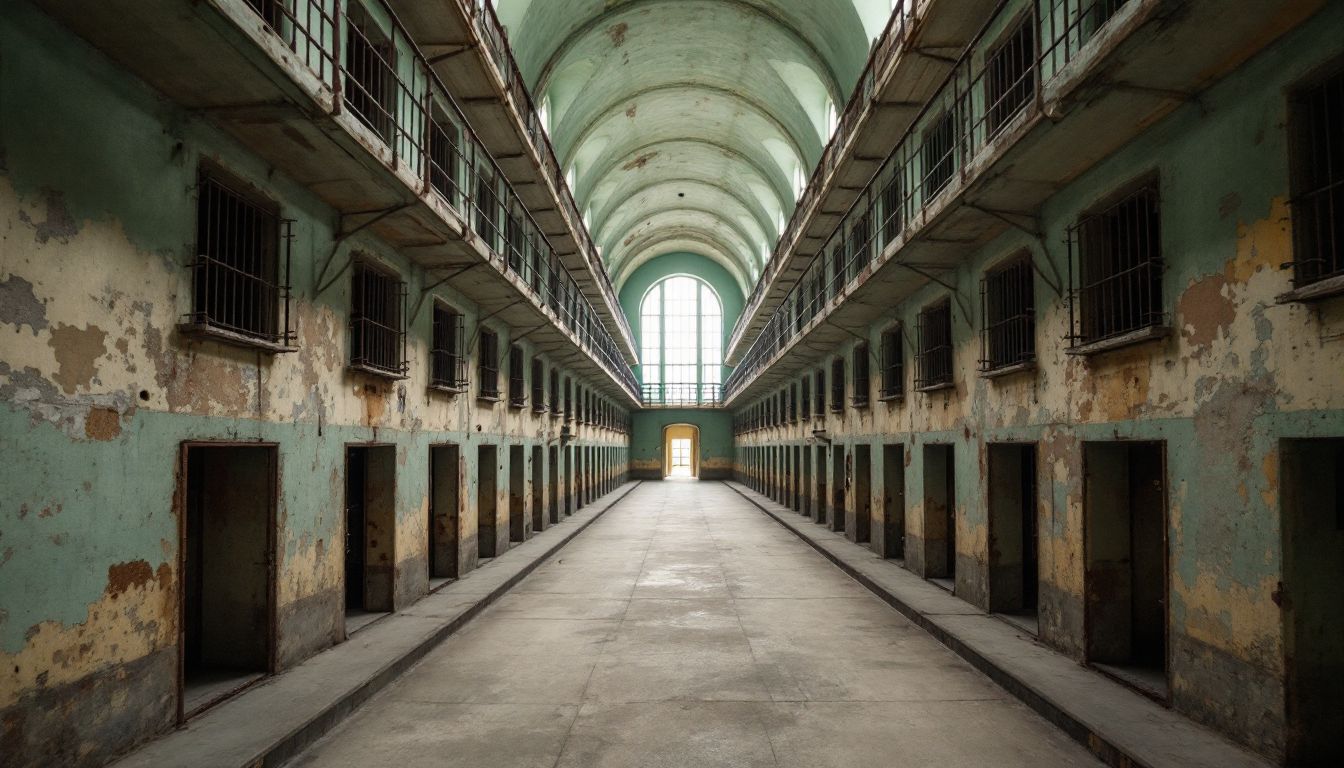
In 1933, the U.S. Department of Justice took Alcatraz Island over from the military and decided to rebuild it as a federal penitentiary.
Alcatraz Federal Penitentiary officially opened on July 1, 1934, and the first civilian inmates arrived on August 11, 1934.
The prison was designed as a last resort, a place to hold the most dangerous felons who had caused trouble at other prisons across the country.
Its design capacity was 336, but the actual population averaged around 260 to 275, and it never reached maximum capacity.
A few things defined Alcatraz during its federal penitentiary years:
A rigid daily routine: life ran on a strict, repetitive schedule built around counts and controlled movement
Heavy surveillance: the entire island was watched, and escape was considered physically impossible
Four rights, everything else earned: inmates were guaranteed food, clothing, shelter, and medical care. Work, library access, letters, family visits, painting, and music all had to be earned through good behavior
One man to a cell: unusual for the era, and something some inmates considered an improvement on other federal prisons
Over this period roughly 1,576 inmates were held at Alcatraz, and about 1,000 of them were transferred to other prisons.
Inmates Who Left Their Mark on American Criminal History
Alcatraz Federal Penitentiary housed some of the most notorious names in American criminal history.
Al Capone (1899-1947) at Alcatraz
Known by inmate number AZ-85, Al Capone is probably the most famous prisoner ever held at Alcatraz.
“Scarface,” the man who ran the Chicago underworld and built an enormous fortune during Prohibition, was held at Alcatraz from 1934 to 1939.
Convicted on tax evasion charges, he was treated no differently from any other inmate on the island and received no special privileges whatsoever.
His syphilis worsened during his time there and his mental state became unstable, and he was eventually transferred to another prison.
Robert Stroud, the “Birdman of Alcatraz” (1890-1963)
Robert Stroud is remembered as the “Birdman of Alcatraz,” but he never actually studied birds at Alcatraz.
His bird research took place earlier, at Leavenworth Penitentiary, between 1920 and 1942.
He was convicted of manslaughter in 1909, and while incarcerated at Leavenworth he killed a guard in 1916 and was sentenced to death for first-degree murder.
In 1920, President Woodrow Wilson commuted that sentence to life in prison.
He was transferred to Alcatraz in 1942, spent 17 years there through 1959, and was then moved to a medical prison facility.
He served 54 years behind bars over the course of his life and died in custody in 1963.
George “Machine Gun” Kelly (1895-1954)
A bank robber convicted in 1933 of kidnapping a wealthy man, and transferred to Alcatraz in 1934.
His nickname came from the Tommy gun he favored.
At Alcatraz he was a model prisoner, and he was transferred to another facility in 1951.
Alvin Karpis (1907-1979)
Karpis was the first criminal the FBI designated “Public Enemy Number One,” and he was held at Alcatraz for 26 straight years, from 1936 to 1962.
That remains the longest stretch anyone served on the island.
As leader of the Barker-Karpis Gang, he was behind a string of bank robberies and kidnappings.
Did Anyone Ever Escape from Alcatraz?
Alcatraz was called inescapable, but between 1934 and its closure in 1963, 36 inmates attempted to escape across 14 separate incidents.
Five of them disappeared, and to this day nobody knows whether they lived or died.
Frank Morris and the Anglin Brothers: The 1962 Alcatraz Escape
The most famous incident in the island’s history took place on the night of June 11, 1962.
Three men were involved:
Frank Morris
Inmate number AZ-1441. A sharp mind with a reported IQ of 133, and a record of escaping from several prisons before this one.
John Anglin
Inmate number AZ-1476. A bank robber serving time at Alcatraz alongside his brother.
Clarence Anglin
Inmate number AZ-1485. John’s brother.
A Meticulously Prepared Plan
The escape took months of careful preparation.
Morris and the Anglin brothers pulled it off in stages:
1. Widening the vents
Using crude tools, including sharpened spoons and a drill improvised from the motor of a broken vacuum cleaner, they slowly widened the ventilation openings at the back of each cell.
2. Building the dummies
They crafted convincing dummy heads out of plaster, flesh-tone paint, and real human hair so their absence would go unnoticed during the night.
3. Securing the route out
They used the pipes and ventilation ducts behind the cell walls to work out a path to the outside of the building.
4. Making the raft
They heat-sealed roughly 50 raincoats together to build their own rubberized boat and life vests.
The Escape and What Happened That Night
On the night of June 11, 1962, the three men put the plan into motion.
They slipped out of their cells between guard rounds, leaving the carefully made dummy heads in their beds so it would look like they were asleep.
From the roof of the building they made their way to the northeast shore of the island and launched their homemade raft.
According to the plan later described to investigators, they meant to reach Angel Island and then cross Raccoon Strait into Marin County.
The next morning’s count revealed all three were gone, and one of the largest manhunts in history began.
The Coast Guard searched the water and the FBI searched on land, but the three men themselves were never found.
The Aftermath
When the morning count exposed the escape, the Coast Guard, the FBI, and the San Francisco Police Department all mobilized for a massive search.
Searchers recovered a homemade life vest, a paddle, and a wallet holding photos of the Anglin brothers from the bay, but no conclusive evidence turned up, and no bodies were ever recovered.
The FBI worked the case for 17 years and turned up no credible evidence that the men were still alive.
On December 31, 1979, it formally closed the investigation and handed the case to the U.S. Marshals Service, and it remains an open case to this day.
That said, some information is said to support the theory that they survived.
In 1975, a photograph taken in Brazil showing two men was reported to bear a striking resemblance to the Anglin brothers.
In 2013, a letter signed “John Anglin” arrived at the San Francisco Police Department, but handwriting and DNA analysis came back inconclusive and the claim was set aside.
Then in 2014, researchers at Delft University of Technology in the Netherlands ran a tidal simulation and concluded that if the men had launched around 11:30 p.m., there was a strong chance they could have reached the northern shore of the mainland.
None of it has ever been decisive, and no official agency has confirmed any of these claims.
In 2022, the U.S. Marshals released updated age-progression images showing what the three would look like in their mid-90s if they are still alive, and asked the public to come forward with tips.
2-4. Why Did Alcatraz Close?
Alcatraz Federal Penitentiary officially closed on March 21, 1963.
One reason was simple: it cost too much to run.
Because it was an island, every supply had to be shipped in from the mainland, and operating costs ran roughly three times those of other prisons.
Water was the biggest headache. There is no fresh water source on the island, so about a million gallons of fresh water had to be barged over every week.
On top of that, salt air was steadily eating away at the buildings, and federal corrections policy was shifting toward more humane treatment of inmates.
Why did the government give up on Alcatraz?
The decisive factor was money. Keeping the prison open would have meant a major restoration bill on top of running costs that were already several times higher than at other federal prisons.
Everything the island needed — food, fuel, supplies, and fresh water — had to come across by boat.
Federal officials concluded it made more sense to build a new institution than to keep patching up an aging prison on an island.
The last 27 inmates left Alcatraz on March 21, 1963, bound for other federal prisons.
With that, 29 years of history as a federal penitentiary came to an end.
2-5. The Native American Occupation of Alcatraz
After the prison closed, Alcatraz Island sat abandoned for a while, until November 20, 1969, when something nobody expected happened: Native American activists occupied it.
How the Occupation Began
A group of 89 Native people calling themselves Indians of All Tribes took the island, led by figures including Richard Oakes, who was Mohawk, and LaNada War Jack.
They pointed to the 1868 Treaty of Fort Laramie as grounds for their demand that unused federal land be returned.
Life on the Island and What They Asked For
The group set up its own system of governance on the island, and at its peak the number of participants grew to around 400.
They called for the following to be built there:
A Native American university
A cultural center
A museum
They held the island for roughly 19 months, running a council that handled security, public health, and even a school system.
Over time, though, internal divisions set in, and activists with agendas different from the original goals began arriving on the island.
How It Ended
On June 11, 1971, federal marshals, FBI special agents, and California state police special forces landed on the island armed, and removed the 15 people still there: five women, four children, and six men.
That brought the roughly 19-month occupation to a close.
The occupation holds real significance in the history of the Native American rights movement.
As the first large-scale protest against the federal government to bring people together across tribal lines, it became a turning point for American Indian policy in the years that followed.
2-6. Becoming a National Park: Preservation and Public Access
In 1972, Alcatraz Island was brought into the National Park System as part of the Golden Gate National Recreation Area.
That made it possible to preserve the island’s historical value while opening it to the public.
Tours for general visitors began in October 1973, and today the island welcomes roughly 1.2 to 1.3 million people a year.
The National Park Service runs a range of exhibits and educational programs to convey the island’s complicated, layered history.
View this post on Instagram
3. Alcatraz Today: What to See and How to Enjoy It
How to Get to Alcatraz
Alcatraz at a glance
Departure point: Pier 33, San Francisco — the only way over
Ferry time: about 15 minutes each way
Time on the island: the National Park Service recommends at least 2–3 hours, plus boarding and ferry time
Cellhouse audio tour: about 45 minutes, available in 11 languages
Included with your ferry ticket: island admission and the audio tour
Currently closed: the cellhouse north wing — dining hall, hospital wing and shower room — until roughly 2028
Note: hours, ticket prices and closures change. Check the official site before you book.
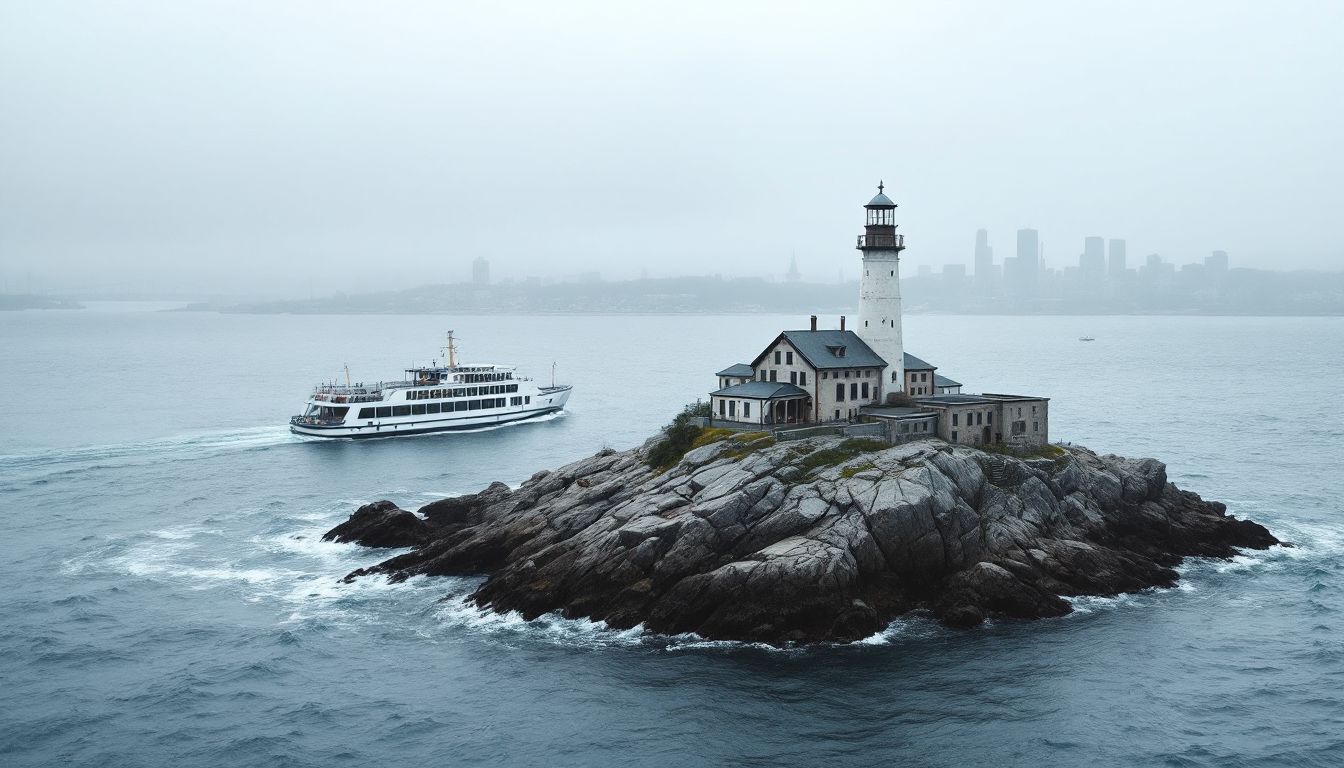
The only way to reach Alcatraz Island is the ferry departing from Pier 33 in San Francisco.
Ferry service is run by the island’s official concessioner, and you book through the official Alcatraz ticketing site.
Your ferry booking covers island admission and the Cellhouse audio tour.
Basic Information
Getting there: about a 15-minute ferry ride from Pier 33
Hours: vary by season, so check the official site before you go
Tour options: day tours, night tours, behind-the-scenes tours, and more
Pricing
Day tours and night tours are priced separately, and night tours run higher than day tours.
Rates get adjusted from year to year, so check the current pricing on the official ticketing site when you book.
The Cellhouse Audio Tour
The highlight of any Alcatraz visit is the Cellhouse audio tour, no contest.
It was built around the accounts of people who were actually there, former inmates and former guards, and it brings daily life on the island back in vivid detail.
What the Audio Tour Includes
Languages: 11 in total — English, Spanish, French, German, Italian, Dutch, Korean, Portuguese, Russian, Mandarin Chinese, and Japanese, plus an English Braille version
Runtime: roughly 45 minutes
Content: daily life recreated through the voices of the men who lived and worked there
The audio tour takes you through spots including:
D-Block (solitary confinement): the most restrictive cell area, reserved for inmates who caused the most trouble.
The dining hall: where inmates ate, and where riots broke out. The original tables and chairs are still preserved there.
The library: where inmates read and studied. Educational programs ran here too.
The recreation yard: the outdoor area where inmates exercised, with sweeping views of San Francisco.
Current access note: Preservation work has closed the north wing of the cellhouse, which includes the dining hall, the hospital wing, and the shower room. The National Park Service expects those areas to stay closed until roughly 2028. The main cellblock and the audio tour route remain fully open. Check the official site for the latest before you go.
Other Things to See on the Island
The lighthouse: first lit in 1854, it is the island’s signature landmark. The tower standing today was rebuilt in 1909, after the 1906 earthquake.
The barracks ruins: remnants from the fortress era that give you a sense of the scale of the military installation.
The Warden’s House ruins: the site where the prison warden and his family lived. The building burned during the Native American occupation, but the foundations remain.
The parade ground: the drill field from the military era, now preserved as open space in the center of the island.
Wildlife and the Natural Side of the Island
For a place this close to a major city, Alcatraz holds onto a surprising amount of natural habitat.
Pelicans, the birds that gave the island its name, are still here, along with a variety of other seabirds.
The island is an important nesting site for colonial seabirds, with cormorants, gulls, night herons, egrets, and pigeon guillemots among the common breeding species.
The sensitive nesting season runs roughly from February through September, so much of the year is good for birdwatching.
Alcatraz is also known for its historic gardens, first planted by lighthouse keepers, military families, prison staff, and inmates who wanted to soften a bare rock.
Restoration work today helps preserve those historic plantings and keep invasive species in check.
New Arrivals
Discover our newest arrivals—available now!
































































































4. Alcatraz on Screen
Alcatraz Island has served as the setting for countless films and television shows.
These are the best known:
Escape from Alcatraz (1979)
Starring Clint Eastwood and based on the real 1962 escape, this film did more than almost anything else to make Alcatraz famous worldwide.
It was shot on the actual island, and the realism of the portrayal got a lot of attention.
Birdman of Alcatraz (1962)
Burt Lancaster stars in this account of Robert Stroud’s life.
Lancaster earned an Academy Award nomination for Best Actor for the role.
Most of it was filmed on studio sets, though, with only limited shooting on Alcatraz itself.
The Rock (1996)
An action film starring Sean Connery and Nicolas Cage.
The premise has terrorists seizing Alcatraz Island, giving the place a modern twist.
Alcatraz has also been the subject of plenty of writing.
From memoirs by former inmates to detective fiction, it turns up across a wide range of genres.
In these works Alcatraz is rarely just a prison. It becomes a setting for exploring bigger themes: human dignity, freedom, and hope.
5. Tips and Things to Know Before You Go
What to Wear
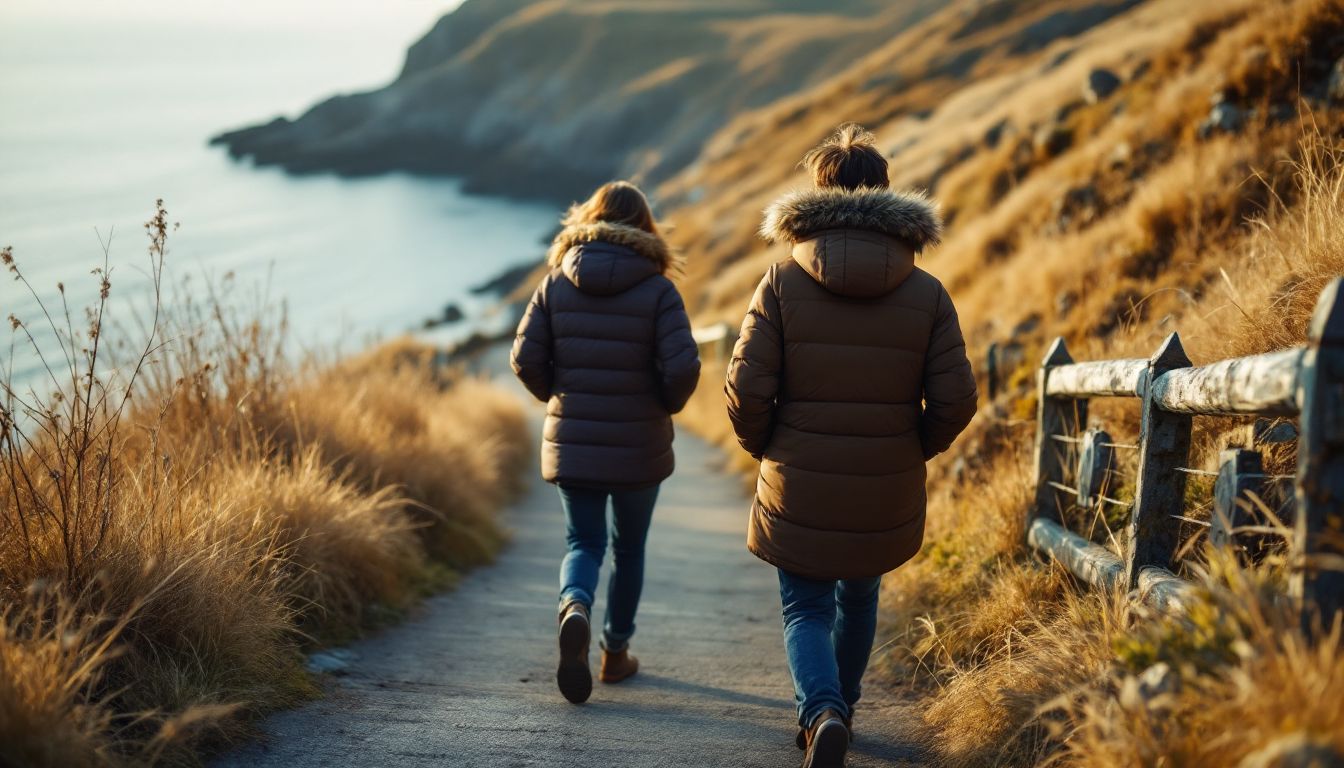
Layers: the island runs colder than the mainland and the wind picks up, so layers are the safe call
Comfortable shoes: there are a lot of hills on the island, so wear shoes you have already broken in
A windbreaker: the sea breeze is strong, and something that blocks the wind makes a real difference
How Long Does the Alcatraz Tour Take?
The National Park Service suggests allowing at least two to three hours on the island itself, plus boarding time and the ferry ride each way.
Roughly how that breaks down:
Ferry ride (about 15 minutes each way, on top of your time on the island)
The Cellhouse audio tour (about 45 minutes)
Exploring the island on your own (at least 1.5 to 2 hours)
Night tours and behind-the-scenes tours run on different timeframes
If you want to take your time, book a morning ferry, spend a few unhurried hours wandering, and head back in the late afternoon.
There is a lot of ground to cover, so building some slack into your schedule makes the whole day go smoother.
An Efficient Route Around the Island
1. Head straight for the Cellhouse audio tour when you arrive
2. After the tour, take in the view from the recreation yard
3. Walk the area around the lighthouse
4. Check out the parade ground and the barracks ruins
5. Stop by the gift shop before boarding the ferry back
Driving up to Northern California for the trip? You will not need a car on Alcatraz itself, and there is no visitor parking at Pier 33 — the Park Service recommends public transit for the ferry terminal. Where your own wheels pay off is everything around it: the drive up, the coastline, and the destinations beyond central San Francisco. Our Hybrid Rental is an easy, fuel-efficient way to cover the miles.
6. Final Thoughts
Alcatraz Island is more than a tourist stop.
Packed into this small island are the bright and dark chapters of American history, along with the enduring human longing for dignity and freedom.
A military fortress, then a prison, then the stage for a Native rights movement: that arc mirrors how American society itself has changed.
Preserved today as part of the national park system, Alcatraz keeps giving visitors something to learn from the past and something to carry forward.
Whether you’re local to the Bay Area or making the trip up from Southern California, it is worth the ferry ride.
We share plenty of other spots worth visiting over on Instagram, so take a look if you are putting a trip together.
View this post on Instagram
About This Information
This article was written using the National Park Service and the official Alcatraz ferry concessioner as primary references. Ticket prices, operating hours, tour lineups, and ferry schedules are subject to change. Please confirm current details on the official Alcatraz website before booking or heading out.
You May Also Like