Winchester Mystery House in San Jose: Story, Hauntings & Visiting Guide
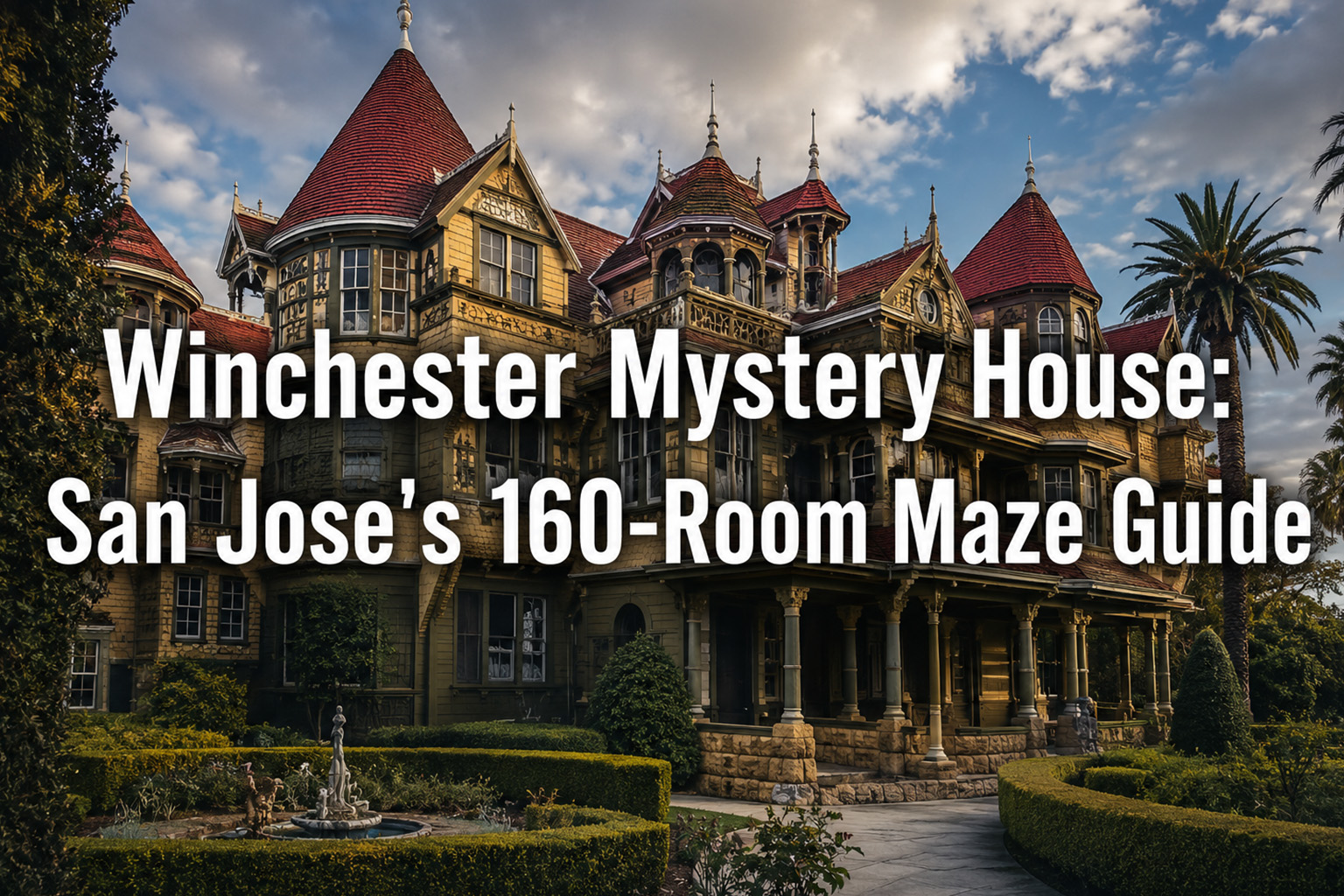
San Jose’s Most Mysterious Landmark: The Winchester Mystery House
If you’re looking for one of the most popular things to do in San Jose, the Winchester Mystery House belongs at the top of the list.
At first glance it looks like a theme park attraction — something close to the Haunted Mansion at Disneyland.
But the key thing to know is that this was a real home, where Sarah Winchester actually lived.
In this guide we’ll dig into why such a strange, maze-like mansion was built in the first place.
We’ll walk through the Winchester family history, the mysteries surrounding the house, and what the place is like to visit today.
Whether you live up in the Bay Area or you’re driving north from Southern California, it’s worth putting on the list the next time you’re exploring Silicon Valley.
1. What Is the Winchester Mystery House?
Rising out of a residential neighborhood near Santana Row in western San Jose, California, the Winchester Mystery House is a sprawling Victorian mansion.
It was expanded and rebuilt continuously from the late 1800s into the early 1900s.
The property started as a small farmhouse on a fruit orchard, purchased in 1886 by the heiress Sarah Lockwood Winchester.
From then until her death in 1922 — 36 years — construction went on almost without a break.
The exterior is essentially Queen Anne style, mixed with Eastlake and Romanesque Revival decorative elements.
By the time work stopped (though “finished” may not be the right word), the numbers were staggering.
The house is generally described as having about 160 rooms, roughly 2,000 doors, around 10,000 window panes, and 47 stairways and fireplaces combined.
Inside you’ll find staircases that dead-end into the ceiling, doors that open onto a drop, and windows that look into interior walls after later additions were built around them.
These oddities have no practical purpose, and together they create an interior that really does feel like a maze.
Nine months after Sarah’s death, on June 30, 1923, the house opened to the public, and it has drawn more than 12 million visitors since.
It was added to the National Register of Historic Places in 1974 and is also designated a California Historical Landmark, and it now draws several hundred thousand visitors a year as a Silicon Valley staple.
Part of the appeal is the contrast: a piece of 19th-century architectural strangeness sitting about 20 to 25 minutes by car from the headquarters of some of the world’s biggest tech companies.
For visitors, the house offers guided tours that cover roughly 110 of the rooms, along with several other themed programs.
History and ghost stories, architectural beauty and pop culture all intersect here, which makes the mansion more than just a sightseeing stop — it’s a small window into American cultural history.
2. The Winchester Family: Guns, Fortune, and Grief
2-1. Oliver F. Winchester and the Rifle Business
Oliver F. Winchester was born in 1810 near Boston, Massachusetts, and built his first fortune as a clothing manufacturer.
In 1855 he bought the struggling Volcanic Repeating Arms Company and moved into the firearms business.
He renamed it the New Haven Arms Company in 1857 and kept refining the lever-action rifle.
In 1866 he renamed the company again — this time after himself — as the Winchester Repeating Arms Company.
The Model 1866 “Yellow Boy” arrived that same year, and along with the later Model 1873 and Model 1894, its rapid-fire capability made it enormously popular.
That’s how the rifles earned the nickname “The Gun That Won the West.”
Settlers, railroad guards, and lawmen all relied on them, and by the end of the 19th century the company had become one of the largest private firearms makers in the country.
Large military contracts during World War I — including Pattern 1914 and M1917 rifles and other ordnance work — pushed the company to record profits.
Oliver Winchester was a businessman rather than an engineer, but he actively hired patent holders.
By pairing steady improvements with mass production, he laid the foundation of the Winchester family fortune.
By the time he died in 1880, the company was reportedly valued at somewhere around $20 million.
2-2. William W. Winchester’s Death and the Inheritance
Oliver’s son William was born in 1837 and served as treasurer, handling the company’s finances and dividend policy.
He became president in 1880, but died of tuberculosis on March 7, 1881, at just 43 years old.
His will left his wife, Sarah L. Winchester, roughly $20 million in cash and about 50% of the shares in the Winchester Repeating Arms Company.
She also received dividends said to be around $1,000 a day for the rest of her life.
Converted using the gold standard of the era, that inheritance would be worth somewhere in the billions in today’s money.
William Winchester left no major technical legacy of his own.
But his conservative financial management positioned the company for the wartime boom, and it left his widow the fortune that made her decades-long building project possible.
2-3. Sarah Lockwood Winchester’s Life and Losses
Sarah Lockwood Pardee — later Sarah Lockwood Winchester — was born in New Haven, Connecticut, in 1839.
She grew up in an upper-class household and was educated in languages and music.
She married William W. Winchester in 1862, and their daughter Annie was born in 1866.
Annie died of marasmus at about six weeks old.
In 1880 she lost her mother and her father-in-law, and in 1881 her husband — a run of grief that came alongside chronic rheumatoid arthritis.
On her doctor’s advice, and with family nearby, she moved to California in 1885 in search of a warmer, drier climate.
In 1886 she bought a 45-acre fruit ranch called Llanada Villa in the Santa Clara Valley for about $12,570, and started remodeling the small farmhouse on the property.
Backed by her enormous fortune, Sarah Winchester kept building for 36 years, right up until her death in 1922.
As for why, explanations range from the advice of a medium to the idea that she simply treated the house as an ongoing architectural experiment.
3. Inside the Build: 36 Years of Nonstop Construction
3-1. How Many Rooms, Doors, and Windows?
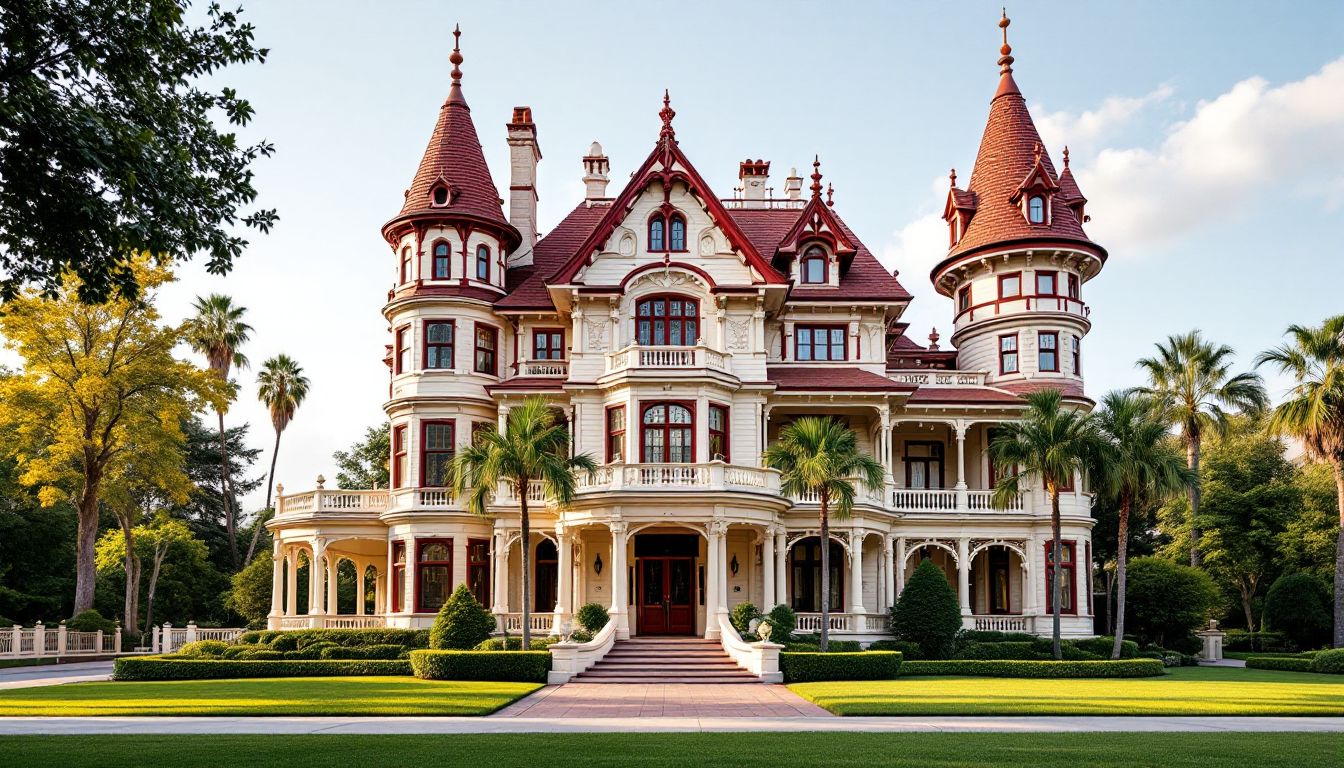
Work began in 1886 and continued for roughly 36 years, until Sarah Winchester’s death in 1922.
The total floor area is around 24,000 square feet, which made it one of the largest private homes in the country at the time.
Sources typically list about 160 rooms (some say 161), roughly 2,000 doors, and around 10,000 panes of glass.
Stairways and fireplaces together number 47, and many of the staircases have uneven risers or shift pitch partway through.
Other numbers are just as unusual for a private residence: 13 bathrooms, 6 kitchens, 52 skylights, and 17 chimneys.
Construction costs are generally estimated at about $5 million at the time, which would translate to somewhere in the range of $70 million to over $100 million today.
3-2. The Strangest Features Inside
There’s a “staircase to nowhere” that climbs only a short way before running into the ceiling.
There are doors on the second floor that open directly onto the exterior wall, with nothing but a drop to the garden below.
And because additions kept getting built around older sections, you’ll find “sealed windows” scattered through the house — former exterior windows that now look into interior walls.
Some columns were installed upside down, with the decorative capital sitting at floor level.
The stained glass includes elaborate custom pieces, with spiderweb tracery and the number 13 showing up again and again as a motif.
3-3. Surprisingly Modern for Its Time
The house had gas lighting piped throughout from a central supply.
A steam-based central heating system fed iron radiators, keeping rooms evenly warm.
Indoor plumbing handled both water supply and drainage, and the house included flush toilets — genuinely advanced for the period.
Rooms were fitted with an annunciator system, a call-bell board that let Sarah Winchester summon staff from anywhere in the house.
A hand-operated Otis elevator was installed to help her move between floors as she got older.
3-4. Ghost Stories and Paranormal Lore
The famous legend says a medium told her to keep building in order to appease the spirits of those killed by Winchester rifles.
That story has never been confirmed by primary sources.
Even so, staff and visitors have long shared stories about a “wheelbarrow ghost” in the basement, said to be pushing ash or coal.
Guests on tours occasionally report a light tug on their clothes, or footsteps that seem to keep pace with them down a hallway.
There are also photos taken in the long hallways and across the front garden that appear to show figures, nicknamed “shadow people.”
That steady, decades-long stream of firsthand accounts is a big part of why the house keeps landing on roundups like Time‘s list of the most haunted places in the country.
4. Visiting Today
4-1. Tour Options
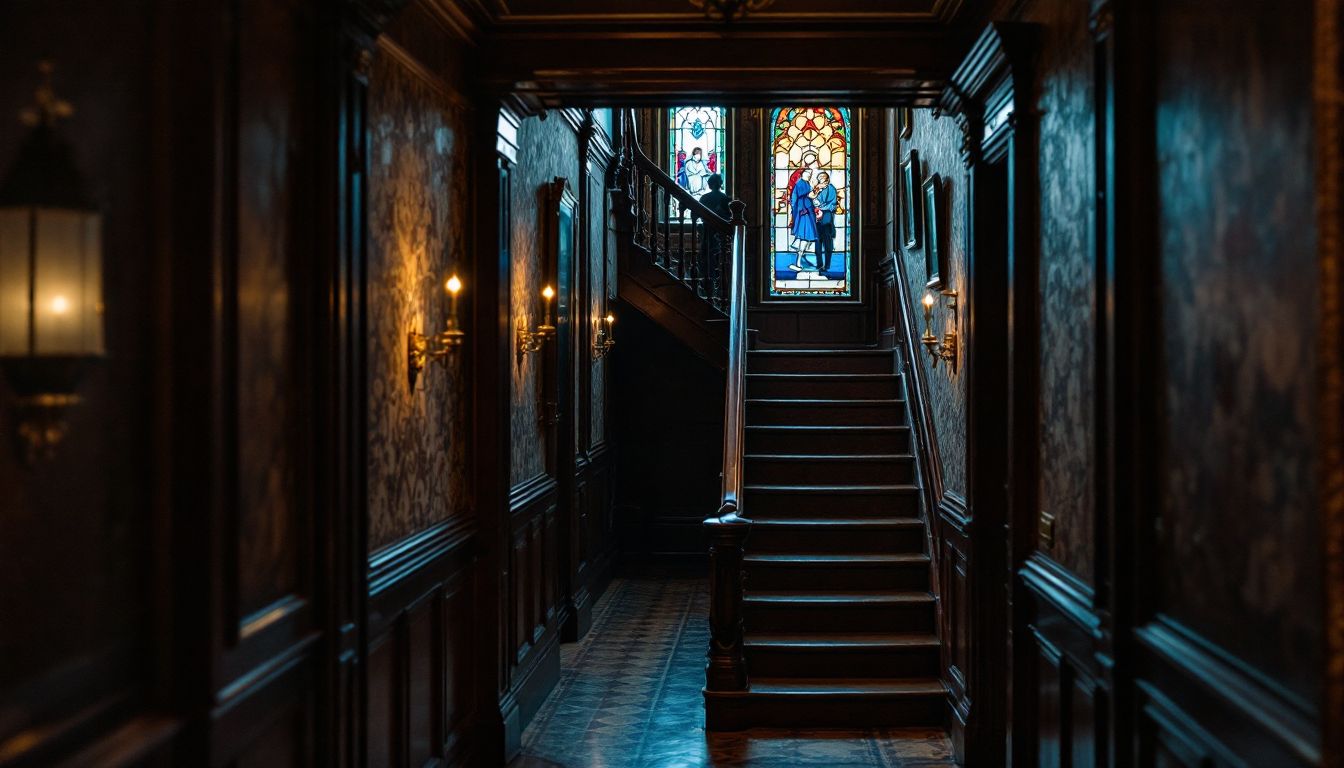
The Winchester Mystery House runs several different tours, so you can pick based on what you’re most curious about.
The main Mansion Tour runs about 65 minutes and covers roughly 110 of the 160 rooms, with a guide walking you through the architecture and stories about Sarah Winchester.
The evening flashlight tour, which runs on select dates, keeps the lighting to a minimum.
You make your way through the house with only a flashlight, which is a big part of why it has a reputation for being the spookiest option.
Beyond the main tour, the lineup changes through the year.
Evening and seasonal programs come and go, so check the official calendar to see what’s running when you visit.
4-2. Tickets and Hours
Timed tickets are best booked in advance through the official website, since same-day tickets can sell out during busy periods.
Pricing is tiered by tour, and discounts are offered from time to time, so it’s best to check the current rates and any current offers when you book.
The evening tours generally cost more than the daytime Mansion Tour.
Hours vary by day of the week and by season, and special events can run later into the evening.
Check the official calendar for the day you plan to visit, including the start time of the last tour.
There’s complimentary parking on site, though space can be limited, and the house sits a short drive from the major Silicon Valley campuses — though travel times vary a lot with traffic.
Driving up from Southern California? It’s a long, mostly freeway drive — the kind of trip where driver-assistance features earn their keep. Our Tesla / FSD Rental lets you rent one for the trip. Full Self-Driving (Supervised) still requires an attentive driver who is ready to take over at all times.
4-3. On-Site Facilities and Services
The gift shop carries Winchester rifle replica magnets, postcards featuring the mansion’s stained glass, and jewelry built around the number 13.
There’s plenty of original merchandise that leans into the mansion’s mysterious atmosphere.
The gardens are included with a Mansion Tour ticket, and you can wander the rose garden, the old orchard grounds, and the lavender beds Sarah Winchester is said to have favored.
Because of the mansion’s many staircases and historic layout, the interior is not wheelchair accessible.
Contact Guest Services before your visit to ask what accommodations are currently available.
Signage is in English and Spanish, and printed guides are available in Japanese and Chinese as well, which makes the visit easier for international travelers.
New Arrivals
Discover our newest arrivals—available now!
























































5. Pop Culture Impact — Including Disneyland’s Haunted Mansion
More than a century after it was built, the Winchester Mystery House still keeps turning up in movies, TV, music, and games.
On the film side, the 1960 horror movie 13 Ghosts drew on the house as a model for its main setting.
In 2018, Winchester, starring Helen Mirren, brought the story to a global audience.
The film took considerable creative liberties with Sarah Winchester’s life and the legend behind the endless construction.
On television, the 2002 miniseries Rose Red, written by Stephen King, drew inspiration from the mansion.
Its central idea — a labyrinthine house that keeps growing on its own — was widely praised as a horror premise.
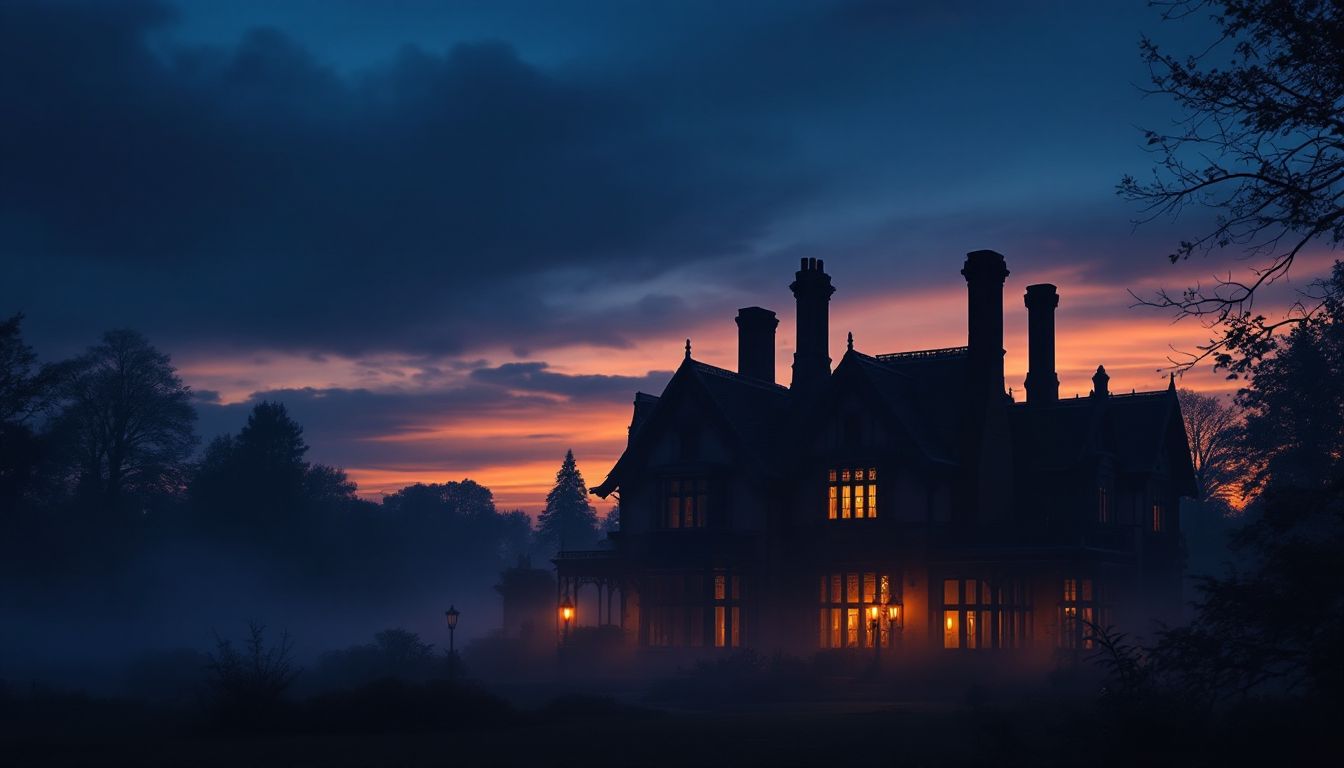
Disneyland’s Haunted Mansion is also frequently linked to this house.
The Winchester Mystery House is often cited as one of the real-world haunted mansions that shaped early concept work for the attraction, and you can see echoes of it in the Gothic exterior and the sense of room after room unfolding.
Beyond theme parks, online creators have filmed walkthroughs here that introduced the mansion and its history to a much younger audience.
Game designers have borrowed from it too, using its winding corridors and dead-end staircases as a model for maze-like level design.
The mansion’s unfinished, open-ended story and its genuinely puzzling layout are what keep pulling creators back.
That’s a big part of why it still gets referenced as an icon of American cultural history, generation after generation.
6. Tips for Your Visit
You’ll be on your feet walking through a very large house with your guide, so comfortable shoes make a real difference.
Some rooms can get warm in the summer, so it’s worth showing up well rested.
If you’d like a printed guide in Japanese or another language, ask a staff member at the start of your tour.
7. Final Thoughts
The Winchester Mystery House sits at the intersection of rapid 19th-century industrialization, an enormous family fortune, and one woman’s personal tragedy.
Thirty-six years of continuous construction produced a building with its own strange logic — a house defined by never being finished.
It has also become a genuinely useful case study for architectural history, women’s history, and the study of American folklore.
Several hundred thousand people still visit each year, and traveler reviews stay consistently strong, which makes it a real contributor to the local economy and tourism.
In the end, the biggest mystery comes down to a single question: why did Sarah Winchester never stop building?
The answer, if there is one, is probably still somewhere inside the house.
If you find yourself in San Jose, go see this strange, wonderful mansion for yourself.
We share more great spots like this one on Instagram — take a look.
Before You Go
This article was written using publicly available information as of August 2026, with the Winchester Mystery House official website as the primary reference.
Ticket prices, tour lineups, and operating hours change from time to time, so please confirm the current details on the official site before your visit.
You May Also Like