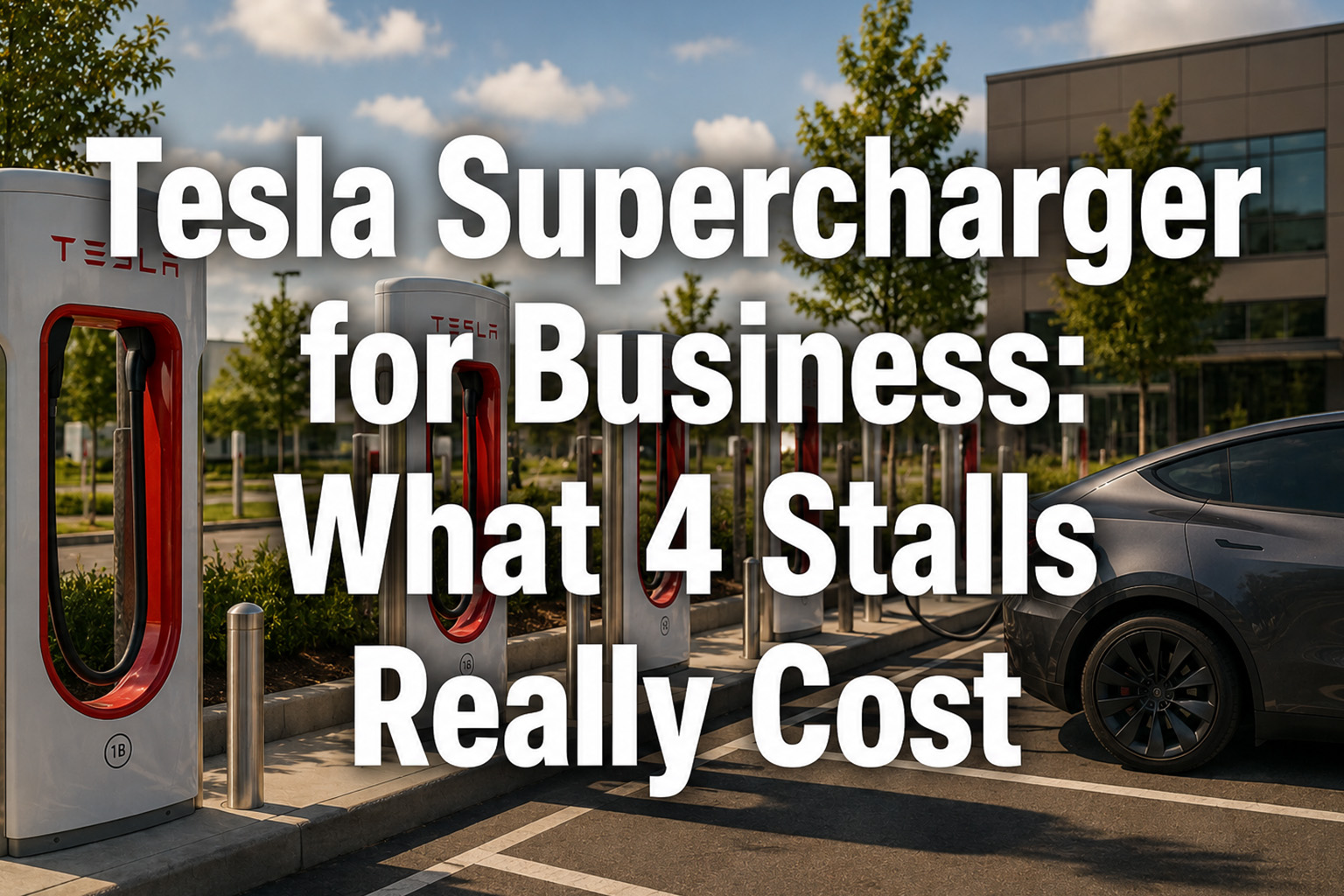
Tesla Supercharger for Business: What 4 Stalls Really Cost
Introduction
Hello everyone. This is Suzuki from EcoDrive.
You may have heard that Tesla started selling its Superchargers to businesses. The natural question is whether that has anything to do with your own store or company.
Actually, it may have a lot to do with you. If you have roughly four parking spaces, this could become a new way to bring customers to your door.
In this article, I’ll share what I learned by contacting Tesla directly, along with what the Tesla Diner in LA suggests about where all of this could go. I’ll keep two things clearly separate: what the program actually offers today, and what is purely my own speculation.
【Watch the Video Version Here】
This article is based on U.S. program information and inquiry responses confirmed as of June 2026. Availability, site requirements, and the split of responsibilities may differ by region.
So What Is “Supercharger for Business”?
The program Tesla announced is generally referred to as Supercharger for Business.
It lets companies and property owners purchase Tesla’s DC fast charging equipment and install it on their own site.
You’re not just buying the chargers themselves.
Tesla’s official materials describe it as a full-service program that combines the hardware with software, remote monitoring, maintenance, and driver support.
Once a site is up and running, Tesla says it appears as a charging location in the Tesla app and in-car navigation, the same way Tesla’s own Superchargers do.
In other words, you’re not simply putting chargers in your parking lot. Your location can become part of Tesla’s charging network, where EV drivers can actually find it.
It Starts at Four Stalls, But Having Four Spots Doesn’t Mean You’re Ready
In a June 2026 response to our inquiry, Tesla told us that the minimum purchase is four charging posts, enough for four vehicles to charge at once.
That means the program is aimed at businesses with at least four parking spaces to dedicate to it.
In that same response, Tesla said nearby amenities within walking distance — a convenience store, a grocery store, that kind of thing — are relevant when a site is evaluated.
A four-stall minimum tells you something useful: in terms of scale alone, this isn’t a program built only for massive travel plazas or big shopping centers.
Restaurants, retail shops, and auto-related businesses with a decent parking lot have room to at least consider it.
Here’s the part that’s easy to misread, though. Having four parking spaces does not mean you can start tomorrow.
DC fast chargers draw serious power, so you also need to look at your site’s electrical capacity, the utility interconnection, trenching and conduit work, foundations, and permitting.
Tesla’s own materials treat installation as the host business’s responsibility, and getting a quote requires entering the installation address.
Four parking spaces is best understood as one of the minimum thresholds for scale, not as the full list of requirements.
For reference, the U.S. Department of Energy’s Alternative Fuels Data Center also notes that the cost of installing DC fast charging equipment varies widely depending on the wiring involved, electrical service upgrades, excavation, labor, and permitting.
The Cost: Around $300,000 to $500,000 for Four Posts?
The number everyone wants first is the price.
When I asked Tesla, the response I received was roughly $300,000 to $500,000 for a four-post project.
At first glance, that sounds steep.
That figure is better treated as a ballpark for planning purposes than as a fixed price that applies everywhere.
It was a preliminary range given to us, not a published price or a final quote. Before treating any number as a budget, you would need to confirm what it covers: hardware alone or installation as well, utility service upgrades, excavation and permitting, shipping and taxes, and any recurring service or payment-processing fees.
Tesla’s official page also requires an installation address before it will produce a quote, because existing electrical infrastructure, the scope of construction work, and site conditions all change what the project actually costs.
What matters in the end isn’t the price of the hardware alone — it’s the all-in number including installation.
Even so, I think this is a big deal.
Put simply, a business can now offer paid fast charging on its own property and earn revenue from charging sessions.
Opening your own gas station from scratch is a tall order. Being able to step into the infrastructure business with about four parking spaces is a very different proposition.
Who Handles What: Tesla and the Host Business
With Supercharger for Business, the host company isn’t running everything from the ground up.
Under the split Tesla describes, Tesla handles the charging hardware, the software, commissioning at startup, remote monitoring, maintenance, and driver support.
The host business handles the installation work and day-to-day site upkeep, and sets its own charging prices.
Tesla supports the technical side of the equipment while the company that owns the land or the storefront runs the business.
Host Businesses Set Their Own Charging Prices
According to Tesla, you set the rate you charge your customers for electricity.
Your cost of power is your own, of course, but being able to set the retail charging price yourself is genuinely interesting to me.
Tesla’s materials also indicate that host businesses can set pricing and can use time-of-day and congestion pricing.
You could price differently during peak hours, or discourage cars from sitting in a stall long after charging finishes. Small levers like those could help you turn a limited set of four stalls over more efficiently.
So this isn’t only about installing chargers. Pricing design and turnover become part of the business itself.
The Real Goal Isn’t Selling Electricity. It’s Foot Traffic.
The revenue from electricity is real. But what I find more important is that this can become a front door for customers.
When your location shows up in the Tesla app and in-car navigation, Tesla drivers who had no reason to know about you can find you and come by to charge.
And if you can make the lot available 24 hours, you can offer charging even when your business is closed.
Instead of going out to find customers, you may be able to build a flow where customers come to you.
Actual usage and the size of that effect will depend on location and local demand. Even so, I think it’s significant.
What makes this interesting is that the revenue has two layers.
One layer is the charging service itself.
The other is your core business — sales generated when a driver who came to charge buys something from you.
If you try to recover the investment on charging fees alone, you’re doing careful math on power costs, equipment, and utilization.
But if a restaurant sells a meal, a retail shop sells merchandise, or a car shop sells a wash or a wiper replacement, the value of a single charging customer stops being just the charging fee.
Whether you see a charger as equipment that sells electricity or as a destination that brings people who stay a while changes what this investment means.
Tesla itself points to store traffic as one of the program’s selling points.
By Tesla’s account, Superchargers in the U.S. see more than 10 charging sessions per stall per day, and a typical 8-stall site can translate into 80 or more visits a day.
That’s a representative example from Tesla, not a guarantee that every location sees the same numbers.
Traffic counts, nearby charging demand, location, pricing, and competition all move that figure.
Still, it’s worth noting that Tesla is presenting visits to the business — not just charging revenue — as a clear benefit.
New Arrivals
Discover our newest arrivals—available now!
Charging Time Isn’t Waiting Time. It’s Dwell Time.
I drive a Tesla myself, and a charging stop still takes me about 30 minutes.
If I want a fuller charge, it can run closer to 40.
Honestly, that’s a lot of downtime.
You can kill time on your phone while you wait, but I always end up curious about what’s around the Supercharger.
So while I’m charging, I usually get out and walk around to see what kind of area I’m in.
Charging time varies with the vehicle, the state of charge when you plug in, battery temperature, and outside temperature. Tesla’s official materials mention adding up to 200 miles of range in 15 minutes, but not every charging stop looks like that.
That charging time is waiting time for the driver — but for the businesses around the stall, it’s dwell time.
A gas car fills up and pulls out in a few minutes. An EV stays put for a stretch, depending on how much it’s charging and the state of the car.
In that window, someone can grab a coffee, eat, shop, take a walk, or get a car wash or a quick check.
What’s around the charging site changes how a driver spends that time entirely.
That’s why I think an EV charger is worth seeing not as energy equipment, but as equipment that creates a place where people stay a while.
If I Ran a Rice Ball Shop (Speculation Starts Here)
From here on, this is my own imagined version of the future. Feel free to picture it along with me.
Say you run a restaurant — in my case I’d picture an onigiri (Japanese rice ball) shop.
You happen to have about six parking spaces, and you put in four Tesla Supercharger stalls.
Now you can offer charging around the clock, year-round, and Tesla owners come to you.
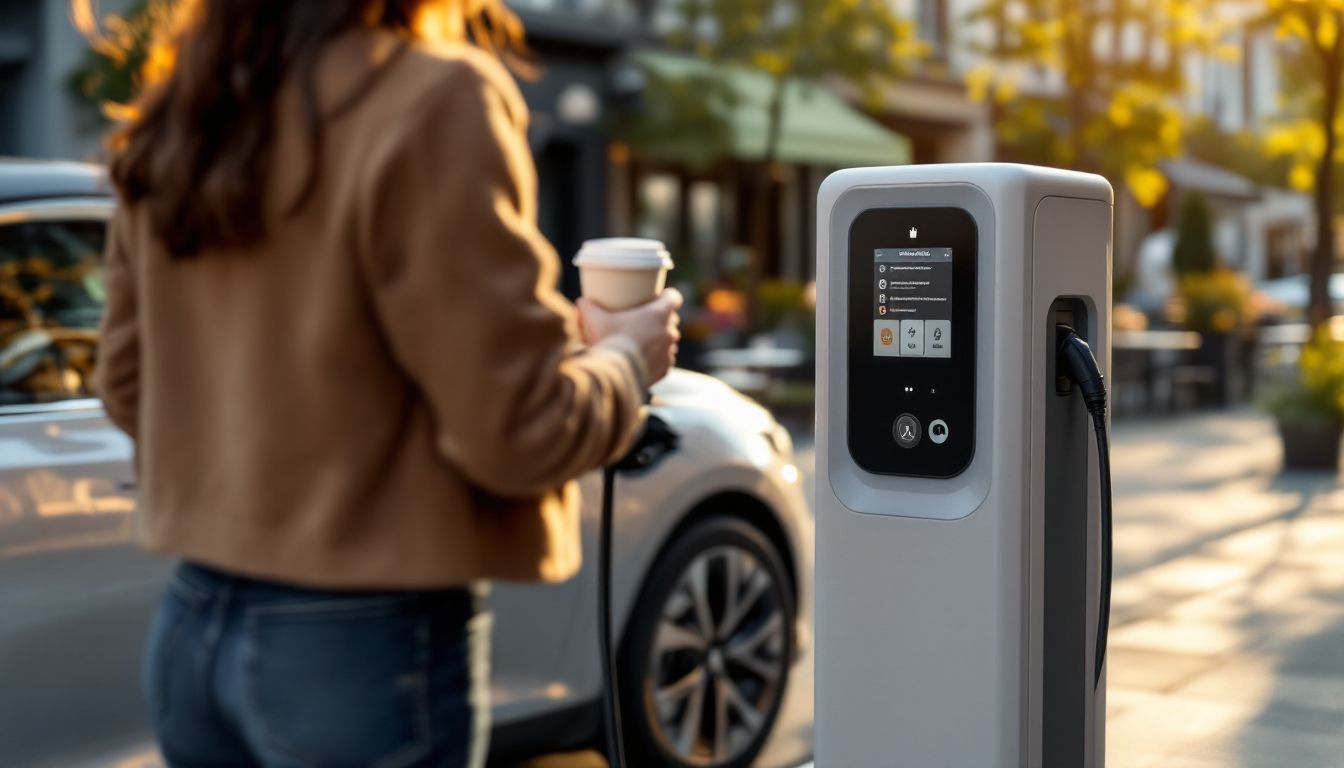
And suppose that the moment a driver parks and starts charging, a browser opens automatically on the car’s screen and shows your menu.
The driver notices you’re a rice ball shop, adds items to a cart, and finishes the order right there.
They pick dine-in or in-car, and if it’s in-car, you bring the food out to the vehicle.
That turns directly into revenue for your business. You’re selling electricity while they charge, and your core business is working at the same time.
Can you picture it?
Treat this strictly as a thought experiment: what if the in-car ordering that already works at the Tesla Diner spread to charging sites run by ordinary businesses?
Whether Tesla is actually thinking that far ahead, I don’t know, and I can’t promise anything.
Still, it’s a fun thing to imagine.
What Could EcoDrive Do With This?
We’re not a restaurant — we’re a car shop, so I thought about what we could offer.
Quick jobs — a tire pressure check, a set of new wiper blades, a wash — are the kind of thing a shop can knock out while a car sits.
If we installed Superchargers at our own location, dedicated four parking spaces to them, and a Tesla driver pulled in, they could see a menu on the car screen for a wash, a tire pressure check, or new wipers, pick what they want, pay in the car, and we’d take care of it.
That much is easy to picture.
The services that fit charging time are the ones that finish quickly and make obvious sense to the driver on the spot.
Instead of setting aside another day to drop the car off, the work gets done during a charge — a better use of the driver’s time.
For the shop, it’s a chance to introduce services to EV owners we’d never have met otherwise.
A Supercharger is charging equipment, but it can also be a way to put a car shop in front of drivers who would never have stopped by otherwise.
No Supercharger required, by the way. If your car is due for an oil change, brake work, hybrid system service, or a more involved repair, our shop in the Los Angeles area handles maintenance and repair today, no charging session needed.
Why This Reaches Beyond Tesla: NACS
Superchargers were built for Tesla vehicles first, but an increasing number of automakers have now adopted Tesla’s charging standard.
The possibility of drawing drivers of non-Tesla EVs as well makes this more interesting.
What’s opening that door is the charging standard known as NACS.
NACS is the North American standard based on the charging design Tesla developed, and it has since been standardized as SAE J3400, published and maintained by SAE.
We’re past the “automakers are going to adopt it” stage. Ford, GM, Rivian, Hyundai, Honda, Toyota, Volkswagen, and BMW are among the brands now listed as having access to Tesla’s Superchargers.
Support still varies by model and by charging site — some vehicles use a native NACS port and others rely on an adapter — but the network is no longer Tesla-only.
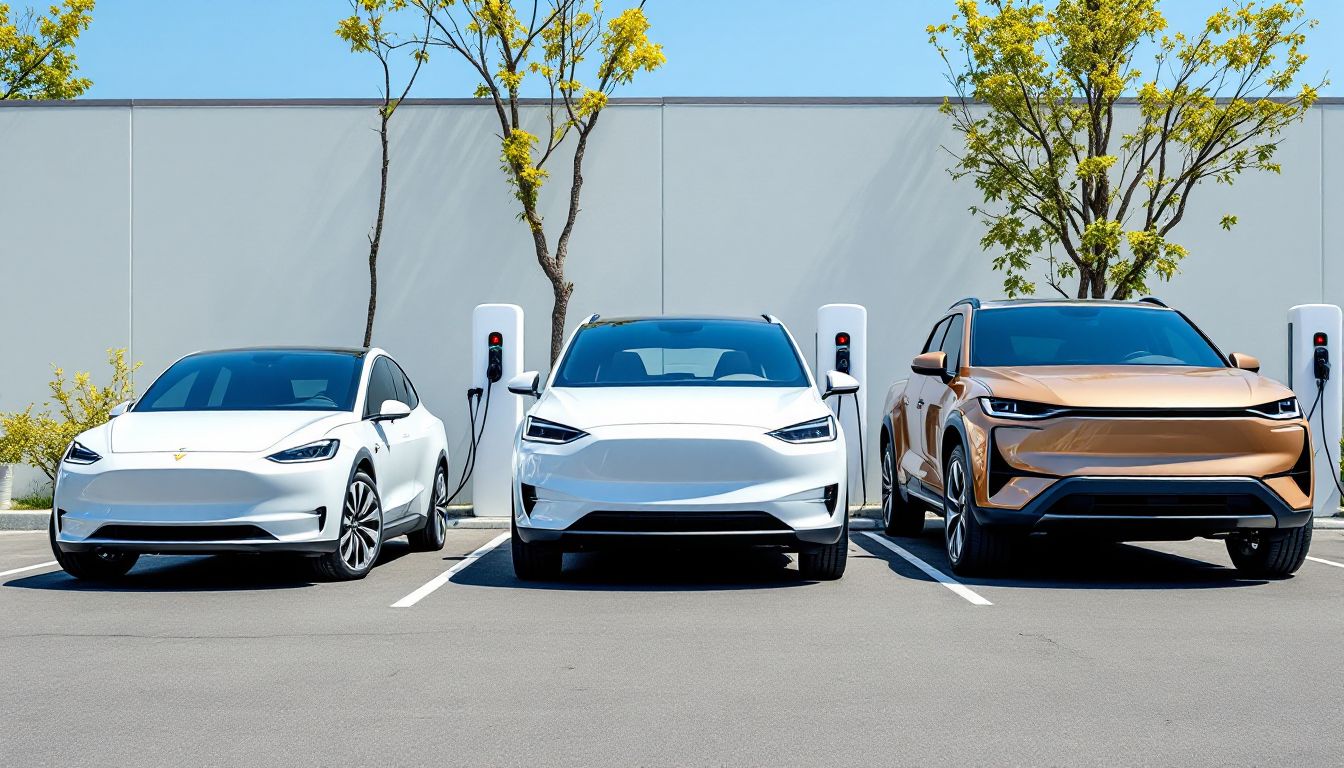
So if a business installs Superchargers, the future customer base isn’t limited to Tesla owners.
As EV drivers across more brands can use the site, its value as a charging destination can grow with it.
Is It Really an “Unmanned Money Machine”? What to Check Before Investing
Authentication, payment, and charging status are all handled in software, so the hardware itself does lend itself to unattended operation.
Tesla says it monitors the network around the clock and provides remote diagnostics and driver support.
In that sense, keeping a charging service running without staff on site is a realistic idea.
But that doesn’t mean the thing prints money the moment it’s installed.
Utilization, your cost of power, your charging price, construction costs, and site upkeep all affect the economics.
Whether you can make the lot available 24 hours differs by property, too.
“Money machine” is not the right mental model if it implies guaranteed profit.
If you’re seriously evaluating this, you need more than the upfront cost — you need a few numbers working together.
First, how many EVs could realistically come to that location in a day.
How much each one charges, and what gross margin is left after power costs.
And what share of charging customers buy something from the business itself.
Those numbers change the payback picture dramatically.
There’s another one to watch: DC fast charging can trigger utility demand charges, billed on your highest short-interval power draw and often applied on top of per-kWh energy costs.
Rate structures vary by utility and by region, so being free to set your charging price doesn’t mean the spread drops straight to the bottom line.
The Department of Energy’s Alternative Fuels Data Center likewise notes that operating costs for charging equipment include electricity, maintenance, and network fees, and that DC fast charging is particularly exposed to demand charges.
What We Know Today vs. What I’m Imagining
Pulling all of this together, here’s how what Tesla actually offers today separates from the future I’ve been imagining on top of it.
| Category | Detail |
|---|---|
| Confirmed today | Businesses can purchase and install Superchargers |
| Confirmed today | The minimum order is four stalls |
| Confirmed today | The host business sets its own charging prices |
| Confirmed today | Sites appear in the Tesla app and in-car navigation |
| Confirmed today | Tesla provides software, remote monitoring, maintenance, and driver support |
| Confirmed today | Many non-Tesla EVs can access Superchargers |
| Confirmed today | At the Tesla Diner, you can order from the car screen and have food brought to your charging stall |
| Speculation | The same in-car ordering is offered to Supercharger for Business hosts |
| Speculation | A store menu appears automatically on the car screen when charging starts |
| Speculation | Ordering a car wash or wiper replacement from the car screen |
Wrapping Up
What makes Supercharger for Business interesting isn’t only that a company can earn charging revenue.
It’s that you can create an ongoing reason for EV drivers — people you had no connection to before — to pull into your property.
A meal at a restaurant, a purchase at a retail shop, a wash or a wiper replacement at a car shop.
If you can connect charging time to the business you already run, a DC fast charger stops being equipment and becomes a front door to a new kind of store experience.
A $300,000 to $500,000 investment is not small, of course.
It’s not something to install without thinking through location, electrical infrastructure, local demand, and fit with your core business.
Even so, the fact that an ordinary business can now join Tesla’s fast charging network starting at four stalls, set its own prices, and draw EV drivers onto its own property opens up real possibilities.
The place where a car refuels and the place where people eat, shop, and get service become one and the same.
The future I felt at the Tesla Diner may be on its way to parking lots at businesses of all kinds.
Want to experience a Tesla before considering an investment like this? We rent the Tesla Model Y equipped with FSD (Supervised), so you can spend a day with the car and the public charging network firsthand. FSD (Supervised) requires active driver supervision and does not make the vehicle autonomous.
Lunch at the Tesla Diner, then Hollywood or Santa Monica, makes for a good test run. See our Tesla & FSD Rental for details.
About the Information in This Article
This article reflects publicly available information checked as of July 26, 2026, drawing primarily on Tesla’s official site, the U.S. Department of Energy’s Alternative Fuels Data Center, and SAE International.
The preliminary cost range and the site-suitability comments attributed to Tesla come from a direct inquiry we made in June 2026. They are not published prices or eligibility guarantees.
Pricing, minimum order quantity, service scope, and supported automakers for Supercharger for Business, along with the various rates and rules involved, are all subject to change.
If you’re considering this for your own property, confirm the current requirements, pricing, included services, recurring fees, and site eligibility directly with Tesla and your local utility.
You May Also Like